
The Wellington to Picton Ferry – Crossing Cook Strait
Interislander or Bluebridge, why your rental car probably cannot come, what the swell is really like, and how often a southerly cancels the sailing.
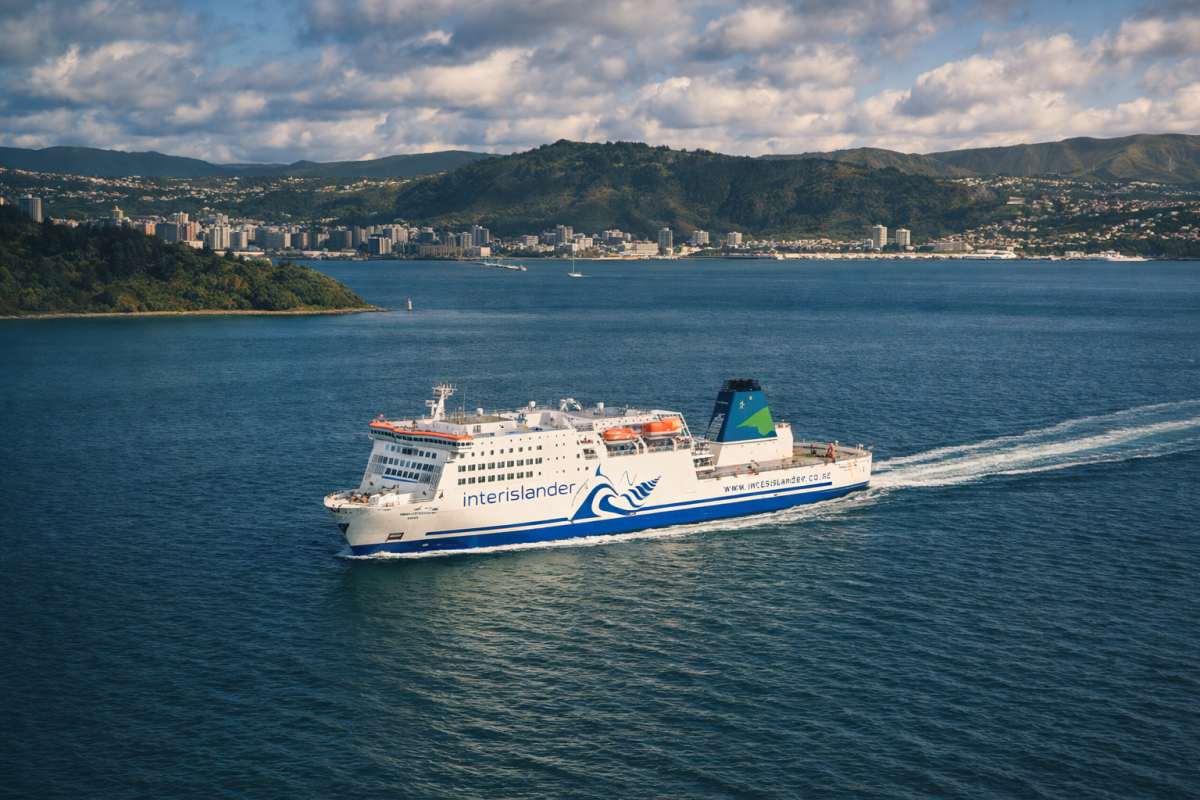
The map makes it look trivial. Twenty-two kilometres of water between the North Island and the South, a line you could almost throw a stone across on a clear day from the Wellington south coast. Yi yi dai shui (一衣带水) – separated by no more than a strip of water – and yet Cook Strait has a reputation that nobody who has crossed it argues with. Three and a half hours, two operators, and one of the more misjudged legs of any New Zealand road trip.
Two Islands, One Strip of Water | 两岛之间,一水之隔
Three and a Half Hours in Two Halves | 三个半小时的两种滋味
The sailing splits in two, and nobody tells you this before you board.
Leaving Wellington you get about ninety minutes of harbour and then open strait – the part with the reputation. Then the ship turns into the Marlborough Sounds and spends the last hour threading between hills that come down to the water, and the whole boat migrates outside to look at them.
Xian ku hou tian (先苦后甜) – the bitter part first, the sweet part after – which is why we prefer sailing south. You earn the Sounds.
Crossings run about three hours twenty, though check-in and unloading make it a five-hour block out of your day.
What the Swell Actually Feels Like | 涌浪到底是什么感觉
The strait is narrow – about 22 kilometres at its tightest, between Cape Terawhiti and Arapawa Island – and that is the problem. Cook Strait (库克海峡) is where the Tasman and the Pacific squeeze past each other, and the wind funnels down it with nothing to slow it.
On a calm day it is unremarkable. On a bad one the ship rolls in a slow, deliberate way that gets into your inner ear about forty minutes in.
What works: stay low and near the middle of the ship, watch the horizon rather than your phone, and go outside into the wind instead of sitting in a warm lounge feeling clever. Ginger tablets before boarding, not after. The narrowest stretch of the strait takes about forty-five minutes to clear.
Two Operators, One Route | 两家渡轮公司怎么选
Two operators run the route and the practical differences are smaller than the internet suggests.
Interislander sails from Aotea Quay, a few kilometres north of Wellington (惠灵顿) railway station, with a shuttle bus for foot passengers. Bluebridge sails from Waterloo Quay, close enough to town that you can walk there with a bag, which matters more than it sounds at six in the morning.
Interislander runs the larger ships and tends to price higher. Bluebridge is often cheaper, runs an overnight sailing, and feels less crowded in January.
Beyond that: same water, same weather, same three and a half hours. Book whichever departure suits your day and stop reading comparison threads.
Fares, Check-In and the Terminal Wait | 票价、值机与码头等待
What a Crossing Actually Costs | 一趟渡轮到底多少钱
Foot passengers pay somewhere between $60 and $110 one way, depending on how far ahead you book and what month it is. A car plus driver starts near $230 in the quiet months and can pass $400 in the first three weeks of January. Campervans are priced by length and go higher again.
Huo bi san jia (货比三家) – compare three shops before you buy – is worth twenty minutes here. The two operators discount at different times, and the gap between the cheapest and dearest sailing on the same day can be a hundred dollars.
Book December and January months out. In June you can usually get a vehicle space the same week.
The Check-In Clock Is Not Negotiable | 值机时间没得商量
Vehicles check in an hour before departure, foot passengers thirty minutes, and both operators mean it. Arrive at the marshalling yard fifty minutes out and you may be watching your sailing leave.
Ning zao wu wan (宁早勿晚) – better early than late – and the terminals are not bad places to wait. Aotea Quay is a shed with coffee and a view of the container port. Picton’s is smaller and sits right in town.
Allow for traffic on the Wellington quays, which backs up badly around 4pm, and for the shuttle from the railway station running to its own timetable rather than yours.
Lounges, Cabins and What Is Worth Paying For | 休息室、客舱与值得花的钱
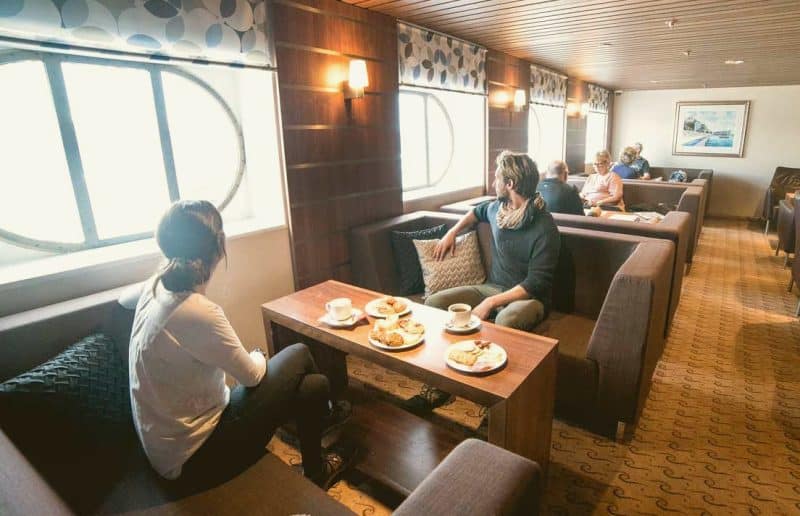
Both operators sell an upgraded lounge – quieter seating, included coffee and snacks, table space – for roughly $50 to $70 extra.
On a flat crossing it is a waste. On a full January sailing, when every bench is taken by a family and their chilly bins, it buys you a window seat.
Cabins are a different question. They earn their money on the overnight sailing, and they earn it if you know you get seasick, because lying flat in a dark room is the most effective thing you can do. Hua qian mai an xin (花钱买安心) – spend a little, buy peace of mind.
On a daytime crossing in decent weather, keep the money for lunch in Picton.
Taking a Car Across | 带车过海峡
The Rental Rule That Catches People Out | 租车合同里的那条规定
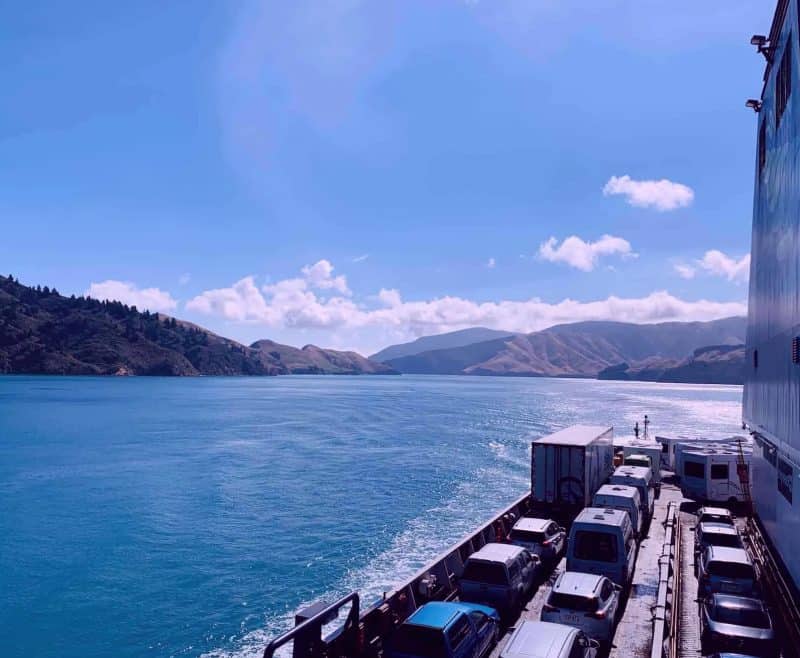
This is what surprises visitors most, and it is worth saying plainly: most New Zealand rental car and campervan companies do not allow their vehicles on the ferry.
Not discouraged – prohibited. Bai zhi hei zi (白纸黑字) – there in black and white in the terms you clicked through – and crossing anyway usually voids your insurance for the whole hire.
A few operators permit it for a fee, usually one that exceeds the alternative.
We watched a family argue this at the terminal counter with a booking confirmation in hand, and lose. Read the hire agreement before you book a vehicle space, not after.
Drop Off, Walk On, Pick Up | 还车、步行上船、再取车
The system the rental companies actually want you to use is cheaper and simpler than it sounds.
You return the car at the Wellington depot, walk onto the ferry as a foot passenger, and collect a second vehicle from the same company in Picton on the South Island (南岛) side. The big chains hold cars at both ends for exactly this, at no cost beyond the two hire periods.
The catch is luggage. You carry everything you own across a terminal, onto a ship, and off it again. Pack so that you can physically do that – two bags you can lift, not a boot full of loose gear.
Check both depot hours. A 7pm arrival into Picton is no use if the branch shut at 5.30.
When Your Own Vehicle Makes Sense | 什么时候值得开自己的车过去
Owning the vehicle changes the maths entirely. If you are moving house, travelling with a dog, or running your own campervan, the fare is money well spent and the drop-off dance is pointless.
A few rules apply once you are aboard:
– you cannot return to the vehicle deck during the crossing
– LPG bottles must be turned off and declared
– pets stay in the vehicle or in the kennels, depending on the operator
You bei wu huan (有备无患) – prepared means no trouble – and the preparation here is packing a day bag before you join the queue: medication, jackets, snacks, chargers.
Southerlies, Cancellations and the Sounds | 南风、停航与峡湾
When the Strait Shuts the Ferry Down | 南风一起,渡轮就停
Cancellations are the part worth planning around. A southerly gale will stop sailings outright, and in winter it happens often enough that we no longer book a same-day connection on either side.
Tian gong bu zuo mei (天公不作美) – the heavens decline to cooperate – and when they do, the operator texts you a few hours out and moves you to the next available sailing. After a bad blow that can mean a day later with a long queue ahead of you.
The backup is the air. Wellington to Blenheim and Wellington to Nelson are short hops, and they keep flying in conditions that stop the ships.
If you have a flight you cannot move, cross the day before.
The Sounds Are the Good Bit | 峡湾才是精华
Then the ship turns, and the reason to do this by sea rather than by plane becomes obvious.
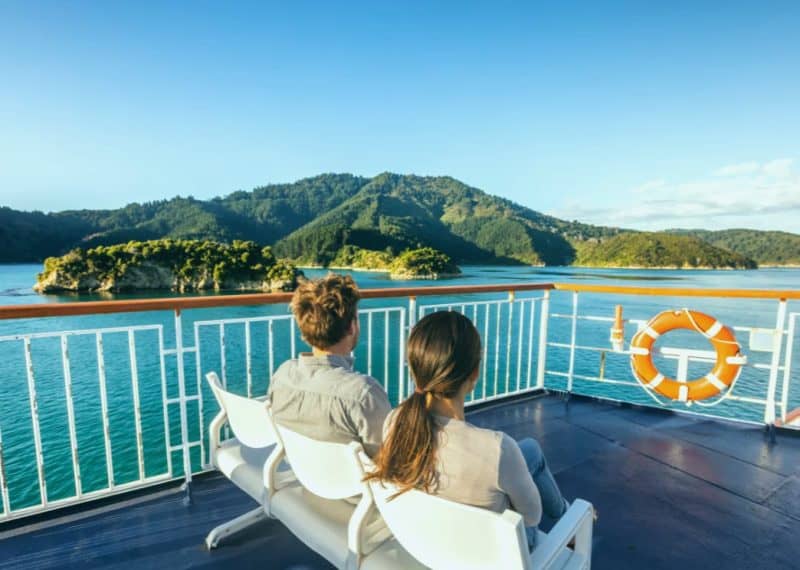
Southbound, the ferry threads through the Tory Channel entrance – a gap in the coast so narrow that first-timers assume the captain has misjudged it – and into Queen Charlotte Sound (夏洛特女王湾). The water goes flat. Steep hills on both sides, mussel farms, holiday houses with no road to them.
The last hour runs below the ridgeline that carries the Queen Charlotte Track, and dusky dolphins turn up often enough to be worth watching for.
Go outside. It is cold and the wind is relentless, and the light on the water at 5pm is the thing you will remember.
There is no dignified way to describe how good it feels to step off at Picton onto ground that stays still. But the strait has already done its work by then – you have crossed a border that a plane erases in twenty-five minutes, and you arrive in the South Island having actually noticed the distance. Bu xu ci xing (不虚此行) – the trip was worth making – even the rough half.
3 Comments
The rental car thing needs to be shouted louder. We booked a vehicle space for a hire car last Easter and only found the clause the night before, so we ended up doing the drop off and pick up with four suitcases and two kids across the Aotea Quay terminal. Doable, but not fun. Would do it again though – the Sounds bit is worth the whole trip.
Good write up. One thing I would add for anyone prone to seasickness: the seats right at the stern on the upper deck are the worst place on the ship, and that is exactly where everyone sits because of the view. Down low and forward, as you say. Also worth knowing the terminal cafe shuts well before the last sailing, so bring food if you are on the evening one.
Crossed in a southerly in July. Never again in winter without a spare day – you were not exaggerating about the cancellations.