
Te Papa – New Zealand’s National Museum in Wellington
Free entry, six floors and the colossal squid. What to see at Te Papa in Wellington, what the tours cost, and how long to allow on a wet day.
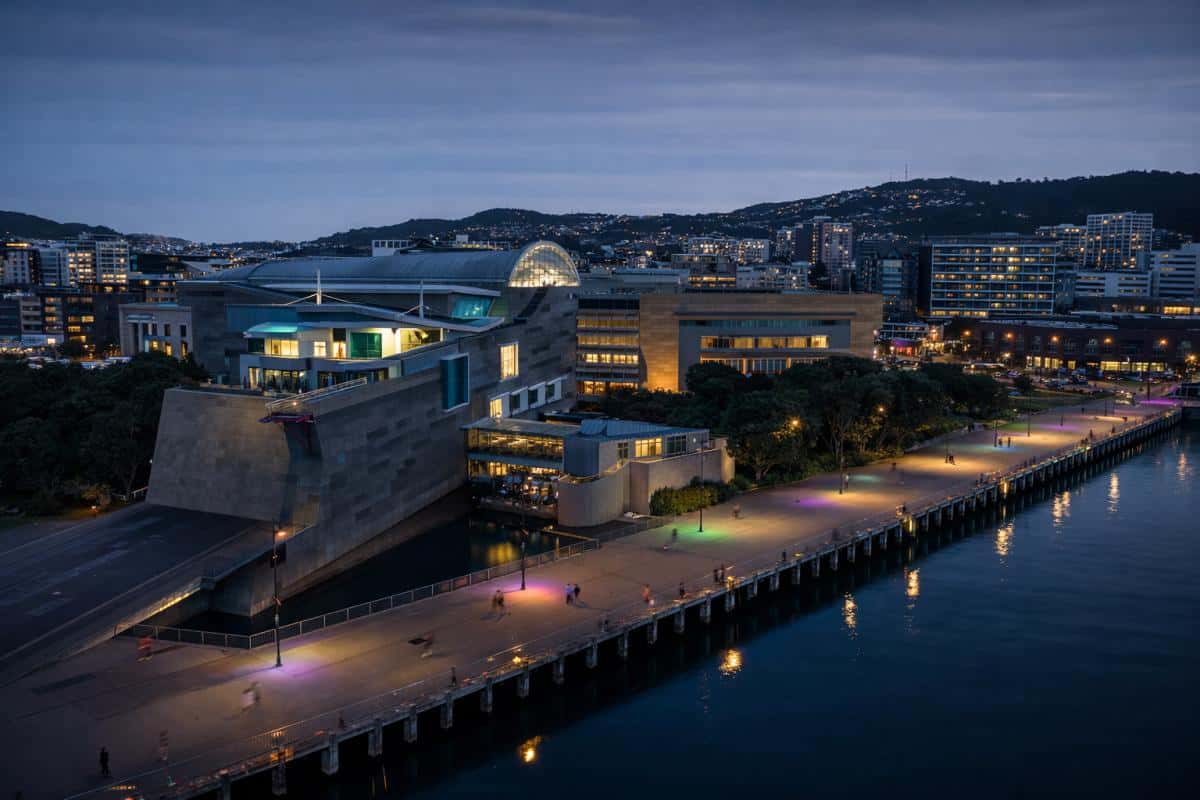
There is a particular Wellington morning where the harbour goes grey, the wind finds the gap between the buildings on Cable Street, and every outdoor plan you made the night before quietly dies. That is the morning you walk into Te Papa. Ru bao shan er kong hui (入宝山而空回) — to walk into a mountain of treasure and come out empty-handed — is the real risk here, because six floors is more than most people plan for.
Why This Is the One Indoor Day Worth Planning | 为什么这是值得专门安排的室内一天
Free Entry, and What It Actually Changes | 免费入场究竟改变了什么
Te Papa does not charge New Zealanders to walk in the door. General entry is free for anyone living here, and that single fact changes how you use the place: you are not obliged to see everything, because you can come back next week for nothing. International visitors pay $35.
The museum sits at 55 Cable Street in Te Aro, on the water in Wellington (惠灵顿), and opens 10am to 6pm every day except Christmas Day. Those hours are tighter than they look. Turn up at 4pm for a quick look and you get ninety minutes with the lights being politely dimmed around you.
A Building That Floats on Its Foundations | 一座浮在地基上的建筑
The building deserves a minute before you go looking at what is inside it. Te Papa opened on 14 February 1998 and covers 36,000 square metres across six floors of galleries, cafes and shops.
It stands on reclaimed harbour land in a city built on a fault line. The answer was base isolation: the whole structure rests on bearings that let the ground move underneath while the building above stays comparatively still. The technology was developed here, and the site was compacted 16 metres deep by dropping 30-tonne weights before anything went up.
Yin di zhi yi (因地制宜) — build for the ground you actually have.
The Southerly Changes Your Plans | 南风会改掉你的行程
Wellington weather is not a joke about the city, it is a scheduling constraint. A southerly comes through Cook Strait and turns a still morning into horizontal rain by lunchtime, and the harbour walk you planned becomes a very wet forty minutes.
So hold Te Papa in reserve rather than booking it for a fixed day. Feng yu wu zu (风雨无阻) — wind and rain will not stop you — applies to exactly one place in central Wellington, and this is it.
The catch is that everyone has the same idea. A wet Saturday in July puts half the region on the same floor at once, and the interactive exhibits grow queues.
The Galleries That Explain the Country | 真正讲清这个国家的展厅
Te Taiao Nature and the Earthquake House | 自然展厅与地震屋
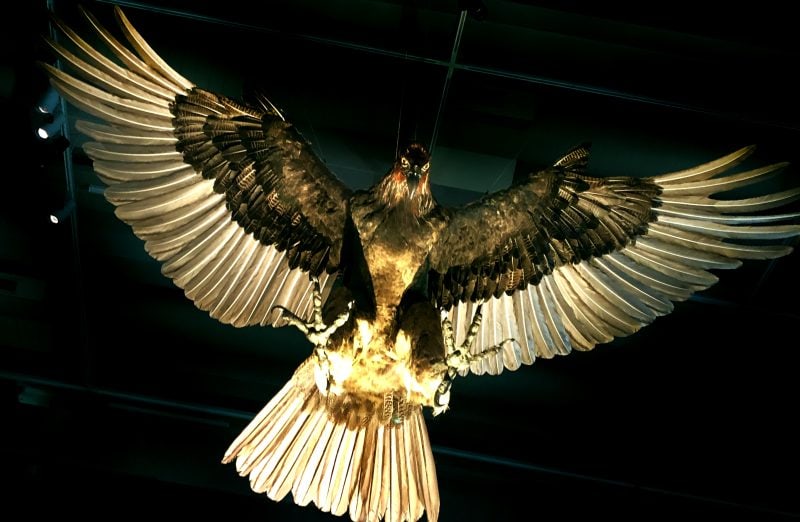
Te Taiao Nature is where we send people first, and not because it is the flashiest. It explains why the country looks the way it does – the seismic churn, the isolation, the birds that stopped bothering to fly because nothing was hunting them.
The earthquake house is part of it. You step into a small suburban kitchen, the door closes, and the room shakes. It is short, it is not frightening, and it makes the geology personal in a way no display panel manages. Shen lin qi jing (身临其境) — as if you are standing in it. Children queue for it twice. Adults who have lived through Kaikoura tend to go quiet afterwards.
Bush City, the outdoor half of the same idea, is easy to miss and worth fifteen minutes on a still day.
The Colossal Squid Nobody Expects | 没人料到的大王酸浆鱿
Nothing here produces the same reaction as the colossal squid. It came up from the Ross Sea on a fishing boat, sits preserved in a tank on the natural history floor, and is enormous in a way photographs flatten completely.
Chu hu yi liao (出乎意料) — not what anyone expects. People arrive planning to think about art and history and end up in front of a deep-sea animal with eyes the size of dinner plates, reading the panel twice.
It is also a bit grim: a dead thing in fluid under gallery lighting, and small children sometimes want to leave. We would still put it on the list.
Te Marae and the Ngati Toa Story | 马拉埃与恩加提托阿的故事
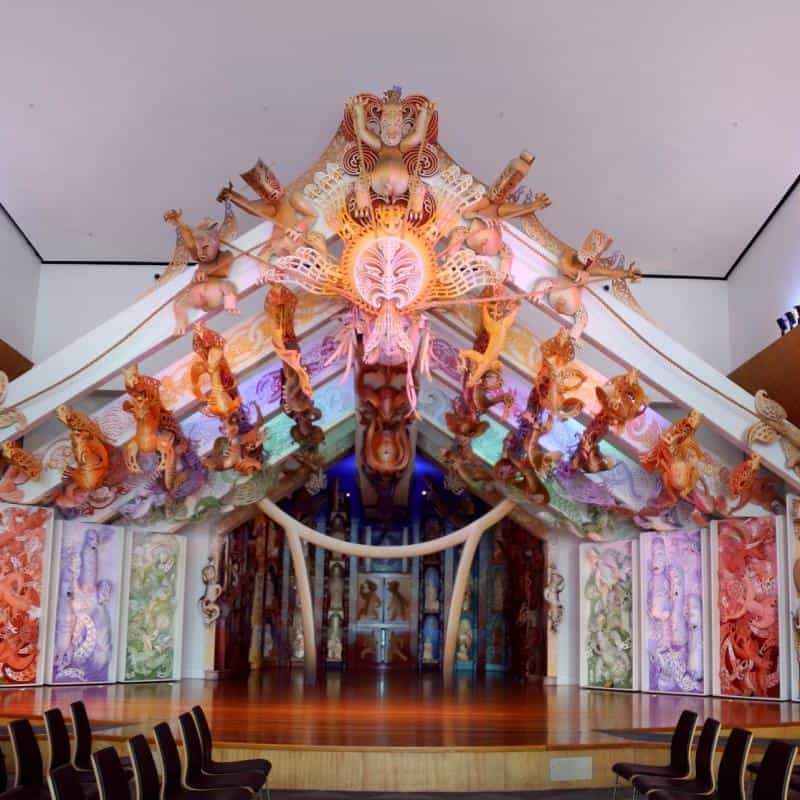
The marae inside the museum surprises overseas visitors most, and it explains what Te Papa is actually for. It is a working marae, carved and built for this building, and it belongs to everyone who comes rather than to a single iwi.
Ru xiang sui su (入乡随俗) — follow the customs of the place you are in. Read the signs, keep your voice down, and look properly at the wharenui before you photograph it.
Alongside it, Whiti Te Ra. tells the story of Ngati Toa Rangatira, the iwi of this region and the top of the South Island. If you came to understand the country rather than photograph it, these are the two hours that do the most work.
Gallipoli, and the Bits Worth Booking | 加里波利,以及值得预订的部分
The Scale of Our War | 战争的尺度
Gallipoli: The Scale of Our War is the exhibition people talk about on the way out. Te Papa built it with Weta Workshop, and it follows eight ordinary New Zealanders through the campaign in their own words.
The figures are the thing. They are modelled at 2.4 times human size – a nurse, a soldier, a man holding his own wound closed – with individual eyelashes and sweat on the skin. The scale is not a gimmick.
Wu sheng sheng you sheng (无声胜有声) — silence says more than sound. The room is quiet and people read every panel. It runs until April 2032, so there is no rush, but do not leave it for the last twenty minutes. Allow an hour, and allow for not wanting to talk much afterwards.
What Costs Money and What Does Not | 哪些收费,哪些不收
General entry covers the permanent exhibitions, Gallipoli included. What costs extra is the short-term shows and the guided tours, and the split is not obvious until you look.
Tours start from $50 and run about an hour. The tour programme includes a Gallipoli tour at 9.30am, a Maori highlights tour at 1pm, an introduction to the museum at several times through the day, and a highlights tour in Mandarin at 11am – worth knowing if you are bringing parents who would rather hear it in Chinese.
Xian dao xian de (先到先得) — first in, first served. Numbers are capped and the Mandarin session fills in peak season. If the budget is tight, skip the tours; the permanent galleries are free and generously labelled.
Toi Art on Levels Four and Five | 四五楼的 Toi Art
Toi Art is the national art collection, nearly 4,000 square metres across Levels 4 and 5, and it is where most day-trippers run out of stamina. A shame, because it is where the museum feels least like a museum.
Bie you dong tian (别有洞天) — a whole other world once you get up there. The hang changes through the year, so what you see depends on the season, but two works tend to hold the room: Black Phoenix by Ralph Hotere, built from a burnt boat hull, and Nga Morehu by Shona Rapira-Davies.
If you have energy for one more floor, go up rather than staying down. The crowds thin higher in the building, and the harbour windows on the way are the best free view in it.
Making the Day Work | 把这一天安排好
How Long to Allow | 该留多少时间
Four hours is the honest answer for a first visit, and that is with a plan. Zou ma guan hua (走马观花) — flowers seen from a galloping horse — is what happens when you give the place ninety minutes.
Half a day gets you the spine: Te Taiao, the squid, Te Marae, Gallipoli. A full day adds Toi Art and Bush City, with a proper break in the middle.
Two mornings is what we would actually do, split at Gallipoli – nature and history first, art and Pacific collections second. The building holds over two million objects and takes roughly 1.1 million people a year. Nobody sees it all. Deciding in advance what you will skip is the whole trick.
Eating, Resting and Getting Out | 吃饭、休息与离开
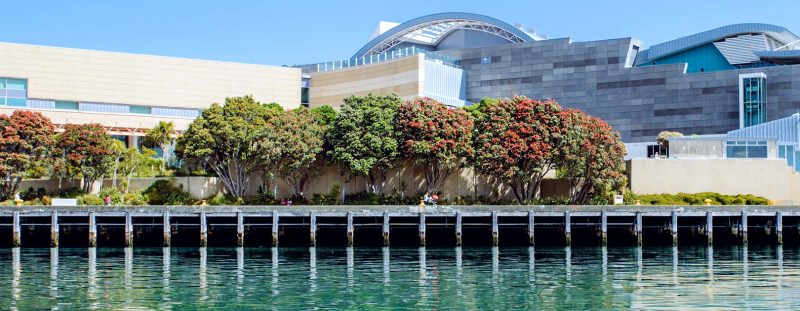
There is a cafe on the ground floor and it does the job, but on a good day we would rather walk. Ten minutes along the waterfront takes you past Chaffers, and fifteen brings you to Cuba Street (古巴街), which has better coffee and more character than any museum cafe in the country.
Mind the timing. Leave at 1pm intending to come straight back and you will not come straight back; the waterfront is very good at absorbing an afternoon.
Parking fills early on wet weekends and the streets around Cable Street are metered and competitive. Buses drop you a few minutes away, and the railway station is about twenty minutes on foot.
Bai wen bu ru yi jian (百闻不如一见) — a hundred descriptions are not worth one look. We have sent visiting family here on their first full day in the country more times than we can count, and the pattern never changes: they go in thinking a museum is something you get through, and come out three hours later talking about a squid, a shaking kitchen, and a face two and a half times too large.
2 Comments
Holding it in reserve for a southerly day is exactly how we use it. Nine years in Welly and I have still never made it past the middle floors in one go.
Booked the 11am Mandarin tour for my parents in January and can confirm it goes quickly – I tried three days out and had to shuffle our whole plan around it. Worth saying the guide covered the Ngati Toa material properly rather than skimming it, which was the part my dad asked all his questions about afterwards. The only thing I would add to your four hours is the queue for the earthquake house on a wet weekend. It was about twenty minutes when we went, and the kids would not leave without doing it.