
Renting a Campervan in New Zealand – What to Know Before You Book
What renting a campervan in New Zealand really costs, what self-contained means for freedom camping, plus licence, insurance and on-the-road tips.
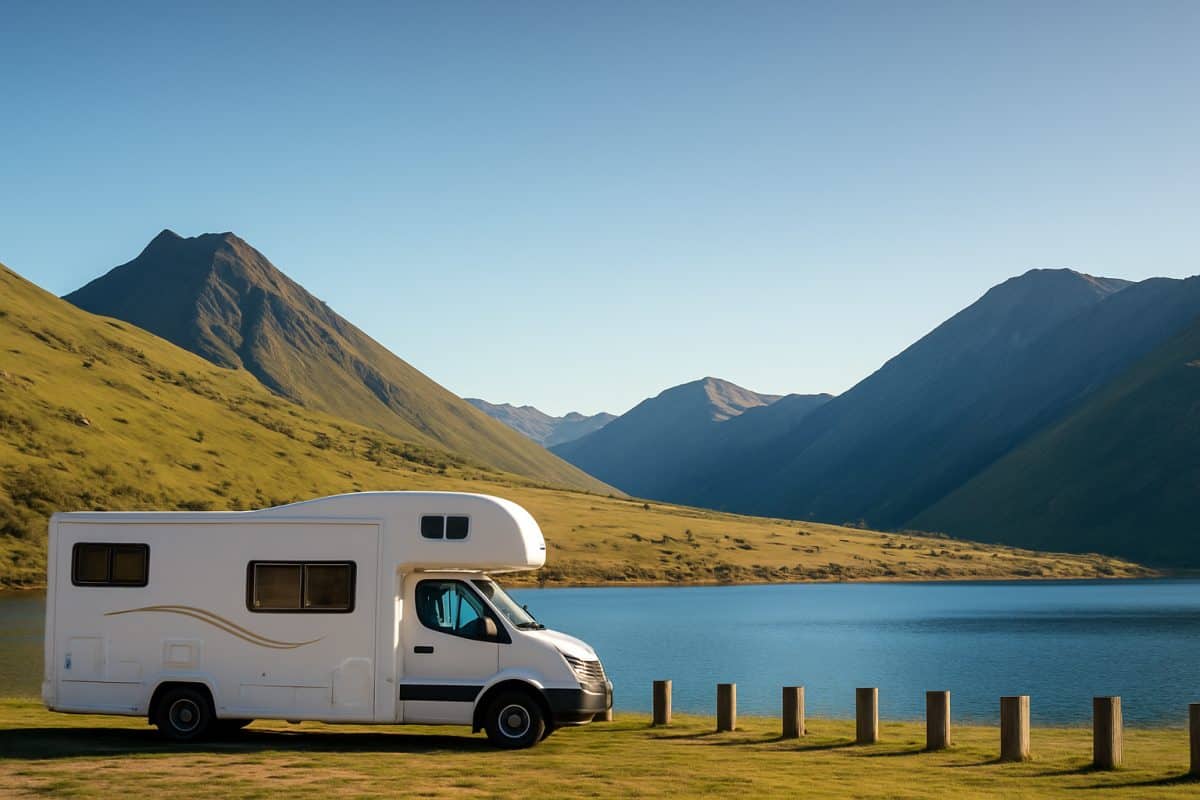
We have rented campervans in New Zealand across three different decades now, in everything from a rattly two-berth to a six-berth motorhome we were faintly terrified of on the Crown Range. A fang che (房车) – literally a “house-car” – is one of the most New Zealand ways to travel there is. It is also the option most likely to blow your budget or catch you out on a rule you did not know existed. Here is what we wish someone had told us before that first booking.
Why a Campervan Makes Sense in New Zealand | 为什么房车自驾适合新西兰
The Freedom It Buys You | 它带来的自由
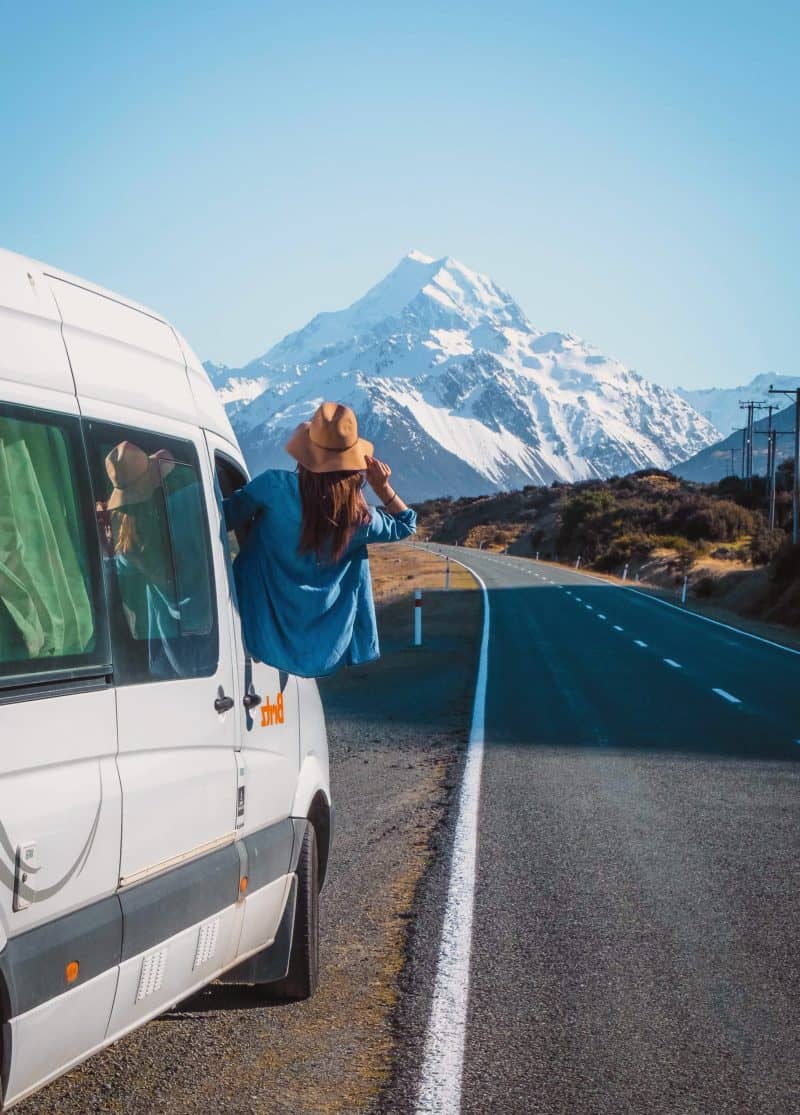
New Zealand is built for this kind of travel in a way few countries are. You can drive for an hour on the West Coast without passing a town worth stopping in, and the places you actually want to wake up next to – a trailhead, an empty beach, a lake that goes still at dawn – rarely have a hotel anywhere near them. A campervan solves that by putting your bed exactly where you want to be. It is the closest thing to shuo zou jiu zou (说走就走) – the idea of just going, with no itinerary holding you hostage. Forecast turned? You drive somewhere else and your accommodation comes with you. For a country whose best moments tend to happen between the towns rather than in them, that flexibility is worth a great deal.
The Honest Downsides | 真实的缺点
It is not all golden-hour beach parks. A campervan in New Zealand is expensive, the roads are narrower and more winding than most visitors expect, and a six-berth is a genuinely large vehicle to thread over an alpine pass or reverse into a tight Dunedin street. You will not shower every day; you learn to jiang jiu (将就) – to make do. As one van-lifer we rate, Petrina Darrah, puts it, the van is “almost never tidy” – muddy boots in the footwell, a sandy towel on the bed, spoons left in the sink. None of this is a dealbreaker, but it is worth knowing before you romanticise the whole thing. If dump stations, careful water rationing and the occasional sub-zero night sound more like a chore than an adventure, a rental car and motels may simply suit you better. Be honest with yourself first.
Choosing the Right Van and Company | 如何选择车型与租车公司
Berths, and What “Self-Contained” Means | 铺位与”自给自足”的含义
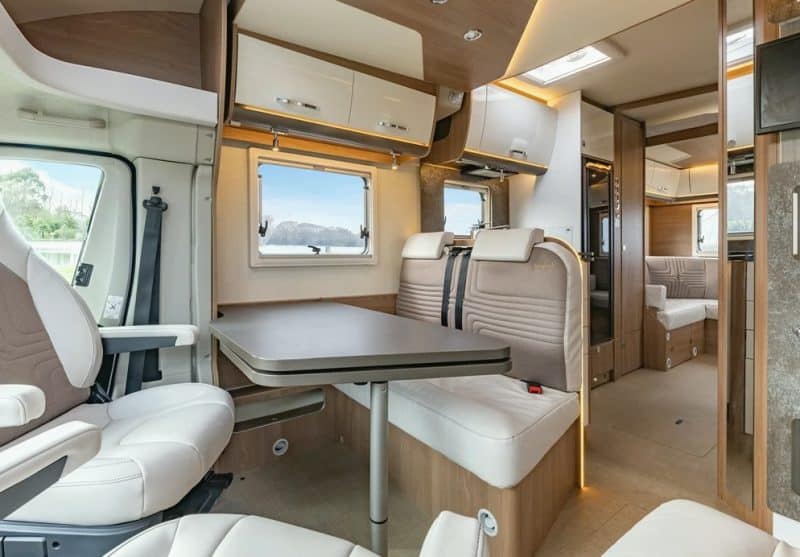
Campervans are sized by “berths” – sleeping spaces – from a compact two-berth up to a six-berth motorhome with a proper shower, toilet and heating. The single most important phrase in the whole process, though, is self-contained – what Chinese speakers would call zi ji zi zu (自给自足), self-sufficient. A certified self-contained vehicle carries a fixed toilet and its own fresh-water and grey-water tanks, sized to keep you independent for three days. That certification is not marketing fluff; it is the legal key that unlocks where you are allowed to sleep. Plenty of cheaper two-berth “sleepervans” are not self-contained, which quietly narrows your options every single night. Before you compare daily rates, decide whether you need that certification – for most people touring beyond the holiday parks the answer is yes, and it changes which vehicles you should even be looking at.
From Budget to Premium | 从经济型到豪华型
The market splits roughly into tiers. At the recognisable end sit JUCY and the big multi-brand operators – Britz, Maui, Apollo, Mighty – with fleets at every major airport and flexible one-way drop-offs, though the brightly branded vans do mean you stand out everywhere you go. Boutique Kiwi outfits like Mad Campers and Big Little Campers build their own fit-outs and tend to earn warmer reviews. At the premium end, Wilderness and Kiwi Motorhomes run newer, often unbranded vehicles if you would rather fly under the radar. There is also Camplify, a peer-to-peer platform with 2,000-plus vans from private owners, with daily rates advertised from around $85. If your head is spinning, a comparison site lets you price the same dates across operators at once. We would always quote two or three before committing – huo bi san jia (货比三家), as the saying goes: compare three shops before you buy.
Self-Contained and Freedom Camping | 自给自足认证与自由露营
What the Self-Contained Sticker Unlocks | 自给自足认证能解锁什么
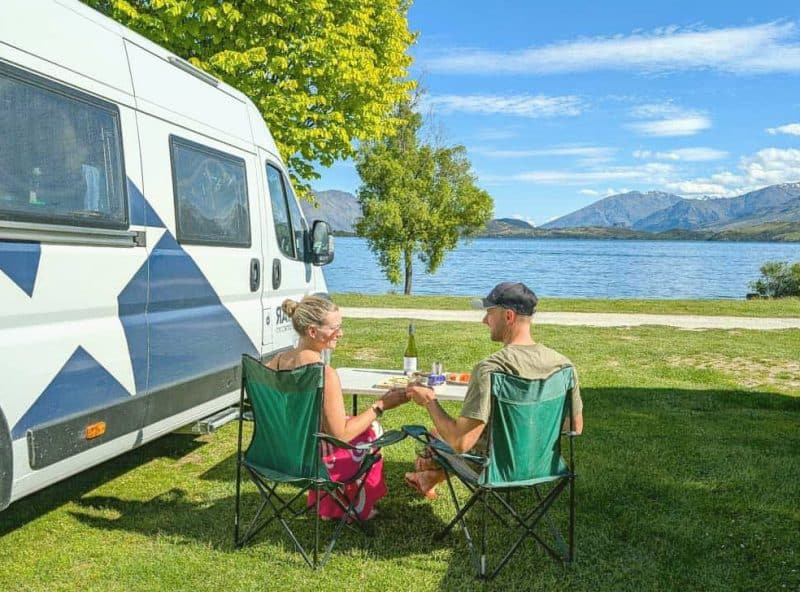
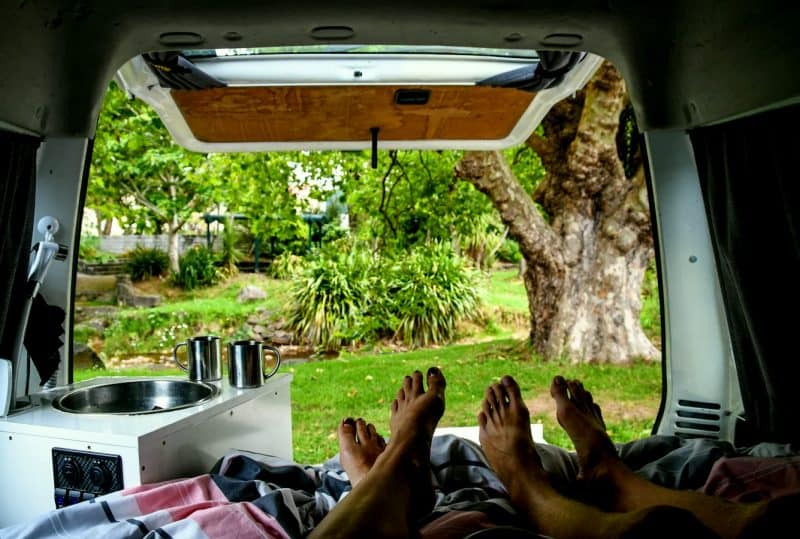
Here is why that certification matters so much. A self-contained vehicle is permitted to stay overnight at designated freedom camping spots all over New Zealand – council reserves, some DOC sites, scenic pull-offs – many of them free, and some in places a hotel could never be built. Over a two-week trip those nights add up to real money saved and, more importantly, to mornings you cannot buy – tui men jian jing (推门见景), opening the door straight onto the view: a lake or an empty bay with no one else around. Without the sticker you are restricted to holiday parks and private campgrounds, which is perfectly pleasant but costs more and tends to put you in a car park rather than a view. The freedom in “freedom camping” is, quite literally, certified.
The Freedom Camping Rules People Get Wrong | 容易搞错的自由露营规定
The catch is that freedom camping is governed locally, and the rules vary wildly from one council to the next. Some districts – the Coromandel is the textbook example – are strict and hand out large fines for camping outside designated areas, self-contained or not. The safe approach is simple: stay only at designated freedom camping spots, DOC campsites, or private family-run campgrounds, and check the local rules before you settle in – ru xiang sui su (入乡随俗), when in Rome. Be aware, too, that the good free spots fill up fast in summer and cannot be booked – if there is somewhere you have your heart set on, arrive in the afternoon, not at dusk. A free app like CamperMate maps designated sites, dump stations and the local rules as you drive. Assume nothing; one wrong overnight can cost you hundreds.
Costs and the Fine Print | 费用与合同细节
What You’ll Actually Pay | 你实际要花多少钱
Budget honestly, because this is where the romance meets the invoice. Daily rates for a self-contained campervan typically run NZD $200-400, but the season swings that hard: peak summer (mid-December to February) is dearest, while the same van can drop to as little as $80 a day in the depths of winter if you can handle a frosty South Island night. The shoulder months are the sweet spot – travel from mid-March and you can pay roughly a third of peak pricing for still-lovely weather. Be clear-eyed about the comparison, though: a campervan is not automatically cheaper than a rental car plus motels once you add fuel for a heavier vehicle and campground fees. There is an old line that fits a road trip well – qiong jia fu lu (穷家富路), be frugal at home but spend where it counts on the road. For an honest, affiliate-free breakdown, Petrina Darrah’s guide is worth reading first.
Bonds, Insurance and One-Way Fees | 押金、保险与单程费
The daily rate is only the headline. Standard insurance usually comes with a hefty bond – $5,000 is common – which is the most you would be liable for if something goes wrong; you can buy that excess down to zero for roughly $35 a day, and on a long trip that peace of mind is often worth it. Expect a non-refundable deposit (around 20%) when you book, and read the cancellation tiers before you commit. Watch the one-way and location fees, too: many operators only let you pick up and drop off at certain cities – Auckland and Christchurch are the usual pair – and charge extra to leave the vehicle elsewhere. None of this is hidden, exactly – but yang mao chu zai yang shen shang (羊毛出在羊身上), the cost always finds its way back to you – and it is easy to miss when you are dazzled by a low daily rate. Add it all up before you compare quotes, not after.
Out on the Road | 上路之后
Licences and Driving on the Left | 驾照与靠左行驶
You can drive a campervan in New Zealand on a full overseas licence as long as it is in English; if it is not, you will need an International Driving Permit or a certified translation carried alongside it. Most operators rent campervans to drivers aged 18 and over, with motorhomes often requiring 21-plus. The bigger adjustment for many visitors is the driving itself: New Zealand drives on the left – kao zuo xing shi (靠左行驶) – and the roads are two-lane and twisting more often than not, with distances that take far longer than they look on the map. One-lane bridges, blind corners and the temptation to push on while tired are the real hazards. Plan shorter daily legs than you think you need, swap drivers, and never treat the official travel times as generous – if anything they assume you do not stop, and the whole point of a campervan is that you do.
The Daily Rhythm | 每日的节奏
Life on the road settles into a pattern quickly. You top up fresh water and empty the tanks at dump stations – free and well signposted, and mapped by apps like CamperMate and Rankers (Rankers is also good for honest campground reviews). You learn to half-fill the kettle, to park nose-out for the morning view, and to shop for groceries in the bigger towns because the next dairy might be ninety minutes away. In peak season, book holiday parks a day or two ahead, especially around Queenstown, Wanaka and the Aoraki/Mount Cook road. And build in slack: the best campervan days are the ones where you spot a side road, take it, and end up somewhere that was never on the plan – sui yu er an (随遇而安), at ease wherever you end up. That, in the end, is the whole reason to travel this way.
A campervan is not the cheapest way to see New Zealand, and it is not the most comfortable. What it is, done right, is the most direct line to the version of this country that lives between the towns – the empty beach, the alpine dawn, the side road you took on a whim. Get the self-contained certification sorted, budget honestly for the season you are travelling in, read the fine print on bonds and one-way fees, and give yourself more days than the map suggests. Do that, and the road takes care of the rest. Lu shang man man lai (路上慢慢来) – take it slow on the road – and it rarely lets you down.
2 Comments
The self-contained certification trips so many people up – we got fined for parking somewhere we thought was fine because the van was not certified for it. Check before you freedom camp, exactly as you say.
Best tip in here is the relocation deals – we got a six-berth from Auckland to Christchurch for almost nothing because they needed it moved. Saved a fortune. Just be flexible on dates.