
Chelsea Bay Auckland – A Quiet Harbour Neighbourhood on the North Shore
Chelsea Bay on Auckland's North Shore pairs a sugar refinery heritage walk with quiet harbour views. A neighbourhood profile from the Birkenhead coast.
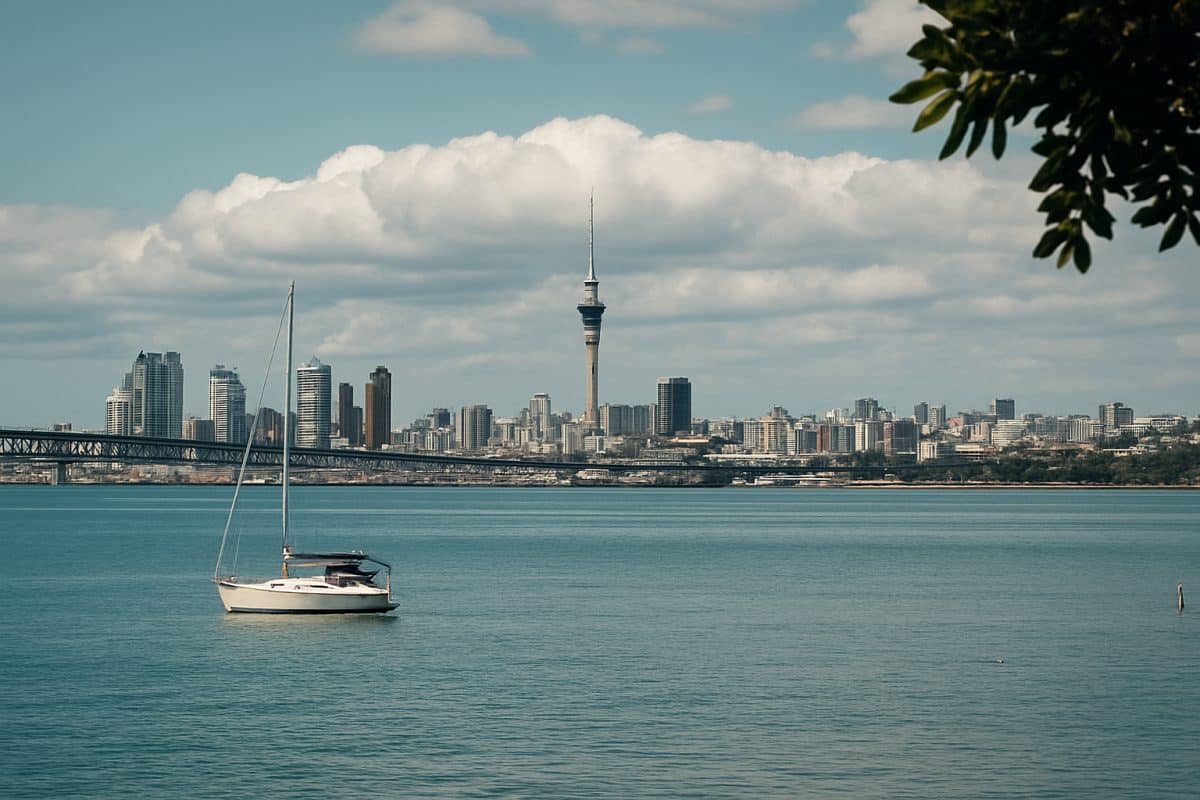
Chelsea Bay is one of those Auckland neighbourhoods that does not appear on anyone’s first list. It sits on the western edge of Birkenhead on the North Shore, tucked between a working sugar refinery and the Waitemata Harbour, and it has been quietly getting on with the business of being a good place to live since the 1880s. We found it by accident — a wrong turn off the main road, a sign for a heritage park we had never heard of — and spent the next two hours walking a waterfront track we had no idea existed, looking at harbour views that nobody seemed to be fighting over.
The Sugar Factory and the Neighbourhood It Made
How a Refinery Built a Community
The Chelsea Sugar Refinery has been processing raw sugar on this stretch of the Waitemata Harbour since 1884, which makes it older than most of the suburbs around it. The New Zealand Sugar Company chose the site for its deep-water wharf access and proximity to Auckland, and within a few years the factory had attracted the workers who needed to live nearby. That pattern — industry first, community second — is how Chelsea Bay came into existence.
Workers’ cottages went up on the hillside above the refinery. A road was cut through the bush. A school followed, then a hall. The neighbourhood grew around the factory the way harbour settlements always did in nineteenth-century Auckland: pragmatically, without a master plan, shaped by the contour of the land and the needs of the people who earned their wages below. By the early 1900s Chelsea Bay had a wharf, a store, and the kind of tight-knit community that forms when everyone works at the same place and walks the same hill home.
We find this origin story worth knowing because it explains something about the neighbourhood that still holds true. Chelsea Bay was never designed to attract visitors or impress. It was built to house people who made sugar, and that utilitarian honesty is still readable in the streets.
The Heritage Park and Waterfront Walk
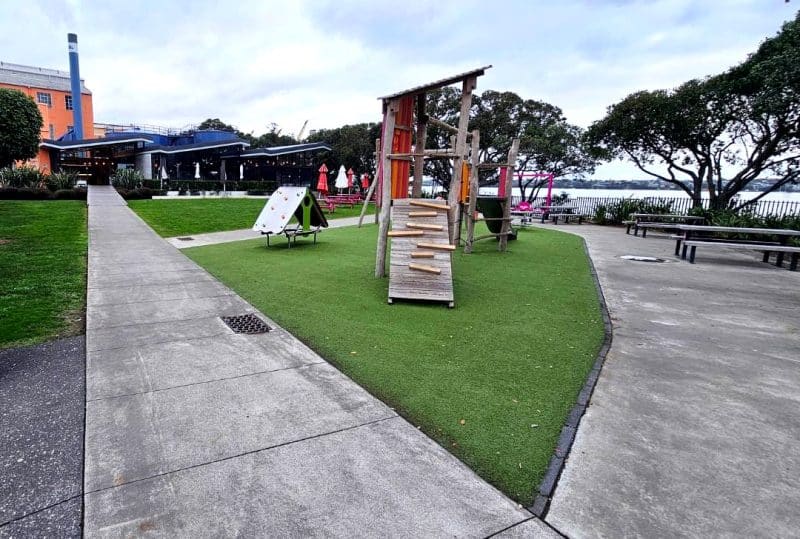
The Chelsea Estate Heritage Park occupies the refinery’s original grounds — a stretch of coastal bush and open lawn between the factory buildings and the harbour edge. It is free, open to the public, and largely empty on weekday mornings when we have walked it most often.
The heritage trail follows the waterfront through pohutukawa and regenerating bush, with interpretation panels marking the sites of former buildings, the original wharf pilings, and the railway line that once carried sugar to the main trunk. The panels are well done — they tell the industrial story without the earnest tone that heritage signage sometimes defaults to. You learn that the factory once had its own fire brigade, its own cricket team, its own social club. A self-contained world.
The walk itself takes thirty to forty minutes at an easy pace. The path is well maintained, mostly flat along the water before climbing gently through bush to loop back. At the harbour edge you get an unobstructed view across to Westmere and Point Chevalier, with the Sky Tower visible behind. On a still morning the water is flat enough to mirror the city. It is the kind of view that reminds you Auckland is a harbour city first and everything else second.
What the Refinery Still Does
One of the genuinely unusual things about Chelsea Bay is that the refinery is still working. This is not a heritage site with a gift shop — it is an operational factory processing raw sugar cane imported from Queensland and Fiji. New Zealand Sugar, now a subsidiary of Mackay Sugar, runs the plant year-round. Trucks still use the access road. The chimney still produces steam.
For residents, this is just the background texture of the neighbourhood. You learn which direction the wind needs to blow before you can smell the molasses. You know the hum of the machinery at night is louder in summer when the plant runs at capacity. The factory is not invisible, but it has been there so long that the community has absorbed it the way any neighbourhood absorbs its landmarks — with familiarity and the occasional complaint about truck noise on the access road.
We find this coexistence interesting because it would not survive a modern planning process. A sugar refinery in the middle of a residential area, metres from the waterfront, surrounded by homes worth well over a million dollars each. It exists because it was there first, and everything else grew around it. That priority is part of what gives Chelsea Bay its character — it is a neighbourhood that accommodated industry, not one that displaced it.
Walking the Water
The Coastal Track from Birkenhead to Chelsea Bay
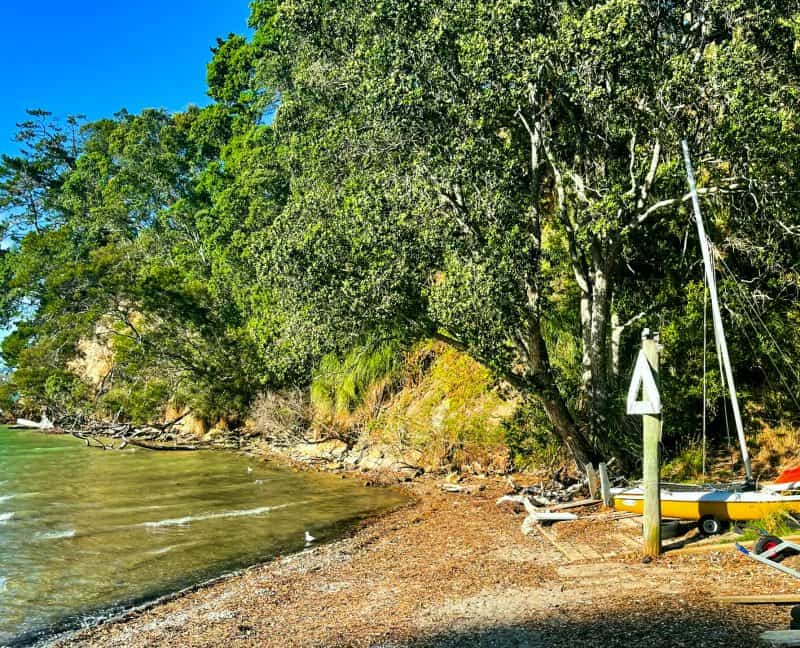
The coastal track from Birkenhead to Chelsea Bay is one of those North Shore walks that locals guard with the quiet selfishness of people who do not want crowds. It follows the harbour edge through a mix of bush reserve and residential street frontage, connecting Birkenhead’s village centre to the Chelsea Estate Heritage Park in about forty minutes of easy walking.
The track starts from the Birkenhead War Memorial Park end, dropping down through bush to the waterline before threading along the coast. The surface alternates between formed gravel paths through reserve land and short stretches of suburban street where the route follows the road past waterfront properties. These road sections are not scenic in themselves, but they give you glimpses through driveways and over fences of what harbour-edge living actually looks like on the North Shore.
The bush sections are the reward. Pohutukawa lean out over the track, the harbour opens up on your left, and for long stretches there is no sound but birds and the slap of water against rocks below. The track connects into the wider North Shore coastal network — you can extend the walk south toward Northcote Point or north through the heritage park and beyond. Bring water and shoes with grip. The track is well maintained but it gains and loses elevation where the coast gets steep.
Harbour Views That Earn the Walk
The harbour views from Chelsea Bay are specific in a way that matters. You are looking south and west across the Waitemata, which means the afternoon light comes from behind you and falls onto the water and the city beyond. The Sky Tower, the port cranes, the container ships sliding through the channel — they are all there, but at a distance that reduces them to scenery rather than surroundings. This is not Devonport’s postcard view. It is quieter, more private, framed by bush and pohutukawa rather than cafes and tourist signage.
From the waterfront path, the harbour feels close enough to touch. At low tide the rocks are exposed and the air smells of seaweed and salt. At high tide the water comes right to the edge of the track in places and the reflections on still evenings are the kind of thing you photograph badly and remember well.
The residential streets above the waterfront offer a different angle — elevated, wider, looking out over rooftops and treetops to the harbour beyond. Some of the houses on the upper streets have views that would bankrupt you in Herne Bay, delivered here with considerably less foot traffic and none of the parking stress. We have stood on Chelsea Bay Road at dusk watching the city lights come on across the water, and it felt like a secret that the North Shore was keeping from itself.
The Quiet Side of the North Shore
Residential Character and Who Lives Here
Chelsea Bay’s residential streets have the unhurried character of a neighbourhood that never tried to be anything other than a place to live. The housing is a mix of older weatherboard villas and bungalows from the early-to-mid twentieth century, interspersed with modern builds and renovations that range from sympathetic to ambitious. There is no dominant architectural style — the streets read as accumulated rather than planned, each house reflecting the era and budget of whoever built it.
The roads are quiet. Not quiet in the way that real estate agents mean when they are trying to sell a house near a highway — genuinely quiet. Chelsea Bay has no through-traffic because there is nowhere to go through to. The streets end at the water or loop back to the main road. Dog walkers and runners outnumber cars on most mornings.
When we first visited, what struck us was how the neighbourhood felt like a smaller town transplanted onto the edge of a major city. In Chinese, we might describe it as youzhe xiaozhen de qifen — having the atmosphere of a small town (you zhe xiao zhen de qi fen). The neighbours know each other. The gardens are established and tended. People choose Chelsea Bay specifically because of what it does not have: no shops, no bars, no cafe strip, no weekend crowds. For families and retirees who prioritise space and water over convenience, that absence is the attraction.
Birkenhead Next Door
Chelsea Bay has no shops, which means Birkenhead is where you go for everything from coffee to groceries. The walk takes about fifteen minutes, or five by car, and the relationship between the two areas is straightforward: Chelsea Bay provides the quiet, Birkenhead provides the services.
Birkenhead village has a reasonable selection for a suburban centre — a New World supermarket, a handful of cafes, a pharmacy, the usual takeaway options. The Saturday morning market at the Birkenhead RSA car park is worth the visit for produce and baked goods if you time it right. It is not a destination market, but it serves the neighbourhood well.
For public transport, the Birkenhead ferry wharf connects to the downtown Auckland terminal, and the crossing takes about fifteen minutes. Bus routes run along Birkenhead Avenue to Takapuna and into the city. Without a car, getting to Chelsea Bay itself involves a bus to Birkenhead and then a walk, which is manageable but not effortless. The area was built around the assumption that residents would drive, and that assumption has not changed much. If you are visiting specifically for the heritage park walk, driving and parking at the Chelsea Estate entrance is the most practical option.
How It Compares to Other Harbour Suburbs
People who know Auckland’s waterfront suburbs tend to name the same places: Devonport for the village and the ferry, Herne Bay for the heritage homes, Westmere for the harbour views. Chelsea Bay rarely makes the list, and that is partly the point.
Devonport has the tourist infrastructure — the cafes along Victoria Road, the Navy Museum, the climb up North Head with its tunnels and gun emplacements. Northcote Point has the dramatic headland views and the peninsula character. Bayswater has the ferry wharf and the marina. Each of these harbour suburbs has something that brings outsiders in.
Chelsea Bay’s distinction is that nothing brings outsiders in except the heritage park, and even that attracts a modest, steady flow rather than a crowd. The residential streets do not have a commercial strip to draw foot traffic. The waterfront does not have a beach in the swimming sense — it is rocky coast and bush, beautiful but not the kind of place where you lay a towel. For us, that is exactly the appeal. Every harbour suburb in Auckland is trading on its water proximity, but most of them have added layers of activity on top of it — restaurants, markets, weekend events. Chelsea Bay kept the water and left everything else out. Whether that suits you depends entirely on what you are looking for.
Getting There and What to Know
Driving Parking and Public Transport
Chelsea Bay is on the North Shore, west of Birkenhead, roughly fifteen minutes from the CBD by car via the Harbour Bridge outside of peak traffic. During rush hour, add another ten to twenty minutes and a good deal of patience — the bridge bottleneck affects every North Shore commute and Chelsea Bay is no exception.
Parking at the Chelsea Estate Heritage Park is limited to a small car park at the main entrance off Rawene Road. On weekday mornings you will find a space without trouble. Weekend afternoons in summer are tighter, and you may need to park on the street and walk a few minutes. The heritage park car park is free, which is a pleasant change from most Auckland waterfront destinations.
By public transport, the most practical route is to take a bus to Birkenhead — routes from Takapuna and the city pass through regularly — and walk from there. There is no direct ferry to Chelsea Bay, but the Birkenhead ferry wharf is about a twenty-minute walk away, or you can take the ferry to Northcote Point and walk along the coast, turning the journey into part of the experience. We have done this loop on a Saturday morning — ferry to Northcote, coastal walk to Chelsea Bay, heritage trail, bus back from Birkenhead — and it makes a satisfying half-day outing.
When to Visit and How Long to Allow
Chelsea Bay works best when you arrive without a schedule. This is not a place with opening hours or timed experiences — the heritage park is open during daylight, the coastal track is always there, and the neighbourhood looks the same whether you arrive at eight in the morning or four in the afternoon.
That said, weekday mornings are the best time for the walk. You will have the track largely to yourself, and the light on the harbour in the morning — particularly on a clear winter day when the air is sharp and the water is steel-blue — is worth setting an alarm for. Weekend mornings are busier but still manageable. Summer weekends see the most visitors, particularly families using the heritage park’s open lawns.
Allow one to two hours if you are walking the heritage trail and waterfront path. If you plan to combine it with the coastal track from Birkenhead, add another forty minutes each way. And if you extend the walk to include Birkenhead village for coffee afterwards — which we recommend — budget a full morning.
The pohutukawa along the waterfront flower in December and January, which is when the coastal walk looks its best. But winter has its own appeal here. Fewer people, cleaner light, and the particular stillness that settles over Auckland’s harbour suburbs when the weather turns cold and everyone stays indoors. We have walked Chelsea Bay in every season, and each one makes a case for itself.
Chelsea Bay is not going to appear in a weekend supplement or a list of Auckland’s best suburbs. It does not have the infrastructure for that kind of attention, and the people who live there would probably prefer it stayed that way. But for anyone who wants to walk a quiet harbour path, see the city from a distance, and spend a morning in a neighbourhood that feels like it belongs to a different era of Auckland — it is there, just off the main road, behind the sugar factory, waiting for you to take the wrong turn.
2 Comments
I have lived in Birkenhead for four years and somehow never walked through to Chelsea Bay until reading this. Went last Saturday — the heritage park waterfront path is gorgeous. That view across to Westmere with the Sky Tower behind it, on a still morning with the water flat… you are right, it is the kind of thing you photograph badly and remember well. Cannot believe I have been driving past the turnoff this whole time.
The bit about the sugar refinery coexisting with million dollar houses is so interesting. You are absolutely right that it would never survive a modern planning process. My partner and I looked at a place in Chelsea Bay last year and the real estate agent kept trying to frame the refinery as “character” which is code for “yes you can smell molasses when the wind is southerly.” We did not buy but honestly I kind of regret it. The quiet there is real.