
The Pie Stops: A Road Trip Guide to New Zealand Regional Bakeries
A Chinese-NZ guide to the bakeries and pie shops that define New Zealand road trips -- from Sheffield to Fairlie, the Waikato to the East Cape.
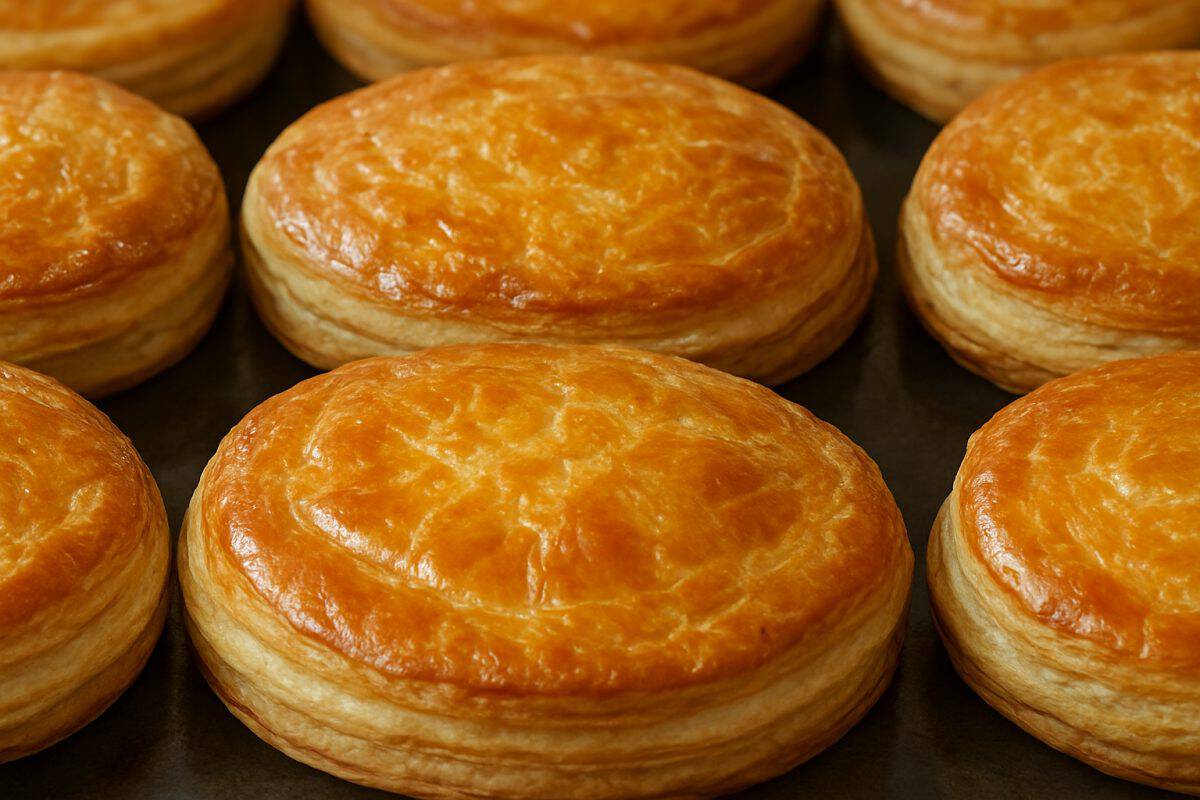
We did not grow up eating pies. In China, the idea of putting ground beef and cheese inside a pastry case and selling it from a heated cabinet at a petrol station would have been met with polite confusion. Then we moved to New Zealand, and someone handed us a paper bag so hot we nearly dropped it, and everything changed. A decade of road trips later, we have strong opinions about which bakeries are worth a detour, which pies justify driving an extra hour, and why the mince and cheese — that unglamorous, perfectly engineered lump of meat and pastry — might be the single best reason to own a car in this country.
How We Learned to Love a Meat Pastry
The First Encounter at a Petrol Station
We were in a queue at a Z station just south of Huntly, somewhere around the third hour of our first road trip out of Auckland, when we realised everyone in front of us was buying the same thing. Not a sandwich. Not sushi. A golden-brown lump of pastry sitting under a heat lamp in a glass cabinet, the kind of food that in China would suggest the kitchen had run out of ideas. The woman ahead of us said “mince and cheese” without looking up from her phone, like she was ordering oxygen.
We pointed at something with a vaguely recognisable filling — chicken, we hoped — and received a paper bag so hot it was difficult to hold. The first bite was confusing. The pastry shattered and the filling was a temperature that suggested magma. The second bite was better. By the time we reached the car, the thing was gone and we were already looking at the cabinet through the window, wondering what “steak and mushroom” tasted like.
Nobody tells you about this when you move to New Zealand. Nobody mentions that a significant portion of the national road-trip experience revolves around choosing a pie from a heated cabinet at a petrol station and eating it with one hand while driving. We had to find out the way everyone finds out: by standing in a queue and doing what the locals did.
What Mince and Cheese Actually Is
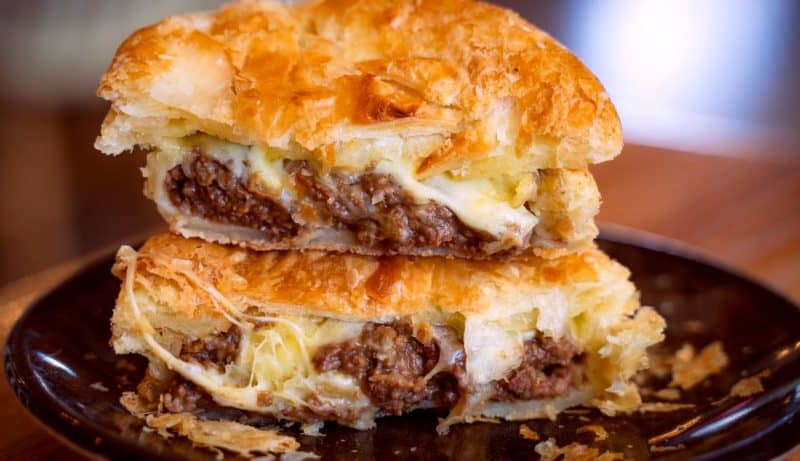
Here is what a mince and cheese pie actually is, for anyone whose culinary education did not include this particular item. Mince is ground beef — niurou mo, if that helps — cooked down with onion, seasoning, and enough gravy to hold it together. Cheese is grated and melted through the filling or layered across the top, depending on the bakery and how generous they are feeling. The whole thing sits in a shortcrust pastry base with a puff pastry lid, the two textures doing completely different jobs: the base holds the structure, the lid provides the flake and the shatter.
It is, objectively, not a complicated piece of food. Beef, cheese, pastry, heat. But the same could be said about baozi — pork, dough, steam — and nobody in China would accept that description as complete. The mince and cheese pie occupies the same cultural position in New Zealand that jianbing occupies in Beijing or xiaolongbao in Shanghai: it is the handheld food that everyone has an opinion about, that varies from place to place, and that somehow becomes a marker of where you are from and what you value.
The main difference is temperature. A jianbing is warm. A NZ pie fresh from the warmer is a liability. It will burn the roof of your mouth and you will keep eating it anyway, because you have committed.
The Flavour Map Beyond Mince
Once you accept mince and cheese as your baseline, the NZ pie opens up into a whole vocabulary of fillings. Steak and cheese is the mince pie with ambition — actual pieces of beef instead of ground meat, usually in a pepper gravy. Butter chicken appeared at some point in the last decade and has become a permanent fixture in most bakery cabinets, the kind of cultural crossover that would make an immigration minister weep with pride. Bacon and egg is the breakfast pie, sold from opening time and gone by ten, a meal that only makes sense if you accept the premise that any food can go inside pastry.
Pepper steak is steak and cheese with attitude. Lamb and mint appears in the South Island more than the North, often near farming country where lamb is not a premium product but a fact of life. The vegetarian options tend to involve kumara or lentils and have improved enormously in the last few years, though any bakery owner will tell you they sell ten mince and cheese for every one vegetarian.
Then there are the regional specials, and this is where things get interesting. Venison pies near Southland. Blue cod pies on the West Coast. Smoked fish pies in the Bay of Plenty. Pork belly pies that someone invented during lockdown and never took off the menu. Every bakery with any pride has at least one pie that you cannot get anywhere else, and finding those is half the point of a road trip.
The Canterbury Corridor: Sheffield to Fairlie
Sheffield Pie Shop and the Art of the Detour
Sheffield is one of those Canterbury towns that barely registers as a town at all — a handful of buildings on the inland road between Darfield and Springfield, population small enough that everyone knows whose ute is parked where. You would drive through it in forty seconds if the pie shop did not exist. But the pie shop does exist, and because of it, Sheffield has become a destination. Not a tourist destination in the brochure sense — there is no information centre, no gift shop, no reason to linger once you have eaten. It is a pie destination, purely and specifically, and people take the longer inland route through the Canterbury foothills for no other reason than to stand in line at this counter.
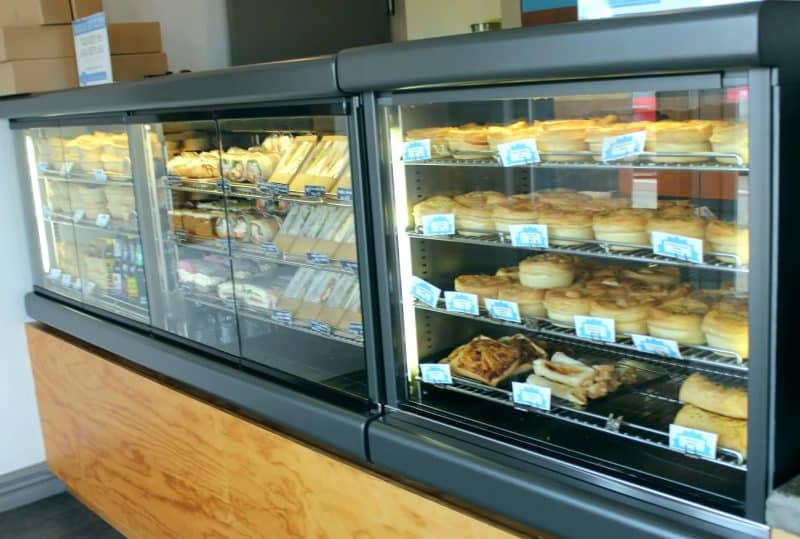
We first went because someone at work mentioned it with the kind of quiet reverence that Kiwis reserve for food they consider sacred. The shop itself is small and plain. The cabinet is the main event: rows of golden pies, the tops slightly domed, the fillings written on small labels. The steak and cheese here has weight to it — proper pieces of beef, a dark gravy, pastry that holds up without going soggy.
We bought four pies for two people and ate them in the car park looking at the hills, and it was one of the best meals we had that year. The queue behind us was six cars deep when we left.
Fairlie Bakehouse and the Salmon Pie Question
Fairlie Bakehouse has the kind of reputation that precedes it by about three hundred kilometres. People in Christchurch talk about it. People in Queenstown talk about it. People on the internet who have never been to the South Island have opinions about it. The bakery sits on the main street of Fairlie, a small Mackenzie Country town that serves as the gateway to the Tekapo and Mount Cook corridor. If you are driving to Aoraki/Mount Cook, you will pass through Fairlie, and if you pass through Fairlie without stopping at the bakehouse, someone will eventually find out and judge you for it.
The salmon pie is the reason. It is the signature item, the one that appears in every list and every recommendation, and it is genuinely divisive. The filling is rich — salmon in a creamy sauce that coats the inside of the pastry — and if you are someone who thinks a pie should be meaty and straightforward, the salmon pie will feel like too much. We think it is excellent. We also think it is not the best thing in the cabinet.
The steak and cheese at Fairlie is superb, and the wild pork pie, when they have it, is the kind of thing that justifies the entire concept of putting meat inside pastry. But the salmon pie is what draws the crowd, and the crowd is real — summer queues can stretch out the door and around the corner, which for a town of eight hundred people is a genuinely surreal sight.
The Stops in Between
The road between Christchurch and the Mackenzie does not have to be a two-stop journey. Geraldine, about ninety minutes south of Christchurch on State Highway 79, is known for Barker fruit products and the giant jersey in the town centre, but it also has a bakery on Talbot Street that does a solid mince and cheese and an underrated chicken pie. It is the kind of place where you stop because you need fuel or a bathroom and leave with a paper bag and a flat white, which is how the best pie discoveries happen.
Methven, the ski-town gateway to Mount Hutt, has cafes that cater to winter visitors with the kind of hearty baking that makes sense after a morning on the slopes. In summer it quietens down, but the bakeries stay open and the pies remain good — if anything, better, because you are not fighting a queue of skiers in wet socks.
Further north, the small towns along the inland route through Springfield and Castle Hill have limited options but occasional surprises — a country store with a pie warmer and three choices, all made that morning, all better than anything you will find at a motorway service centre. The point is that the Canterbury corridor rewards the driver who is willing to stop on a feeling rather than a recommendation. Some of the best pies we have eaten in this region were found by accident, in places we only stopped because the fuel light was on.
North Island: The Bakeries Between the Cities
The Huntly-Tirau-Taupo Run
The drive south from Auckland through the Waikato is the most-driven road trip in New Zealand, and every family that does it has a pie stop. The disagreements are about where. Huntly is the first real candidate — a working town on the Waikato River that most Auckland drivers treat as a speed-limit inconvenience on the way to somewhere better. But Huntly has bakeries, and they are good, and stopping there means you eat early enough in the drive that the pie serves as fuel rather than regret.
Further south, Tirau — the town with the corrugated iron dog and sheep buildings — is a popular stretch-the-legs stop, and the bakeries here benefit from the foot traffic. The pies are reliable rather than revelatory, but reliable is exactly what you want at the halfway mark of a four-hour drive. Tokoroa is Tirau without the tourists, a forestry town where the bakery serves the community first and passing drivers second, which is usually a good sign.
By the time you reach Taupo, the options multiply — cafes, bakeries, and the kind of pie-and-coffee combinations that tourist towns do well. But for us, the best Waikato pie stop has always been somewhere before Taupo, in a town that nobody would visit for any other reason, where the bakery opens at five in the morning and sells out of bacon and egg pies before most tourists have checked out of their motels.
The East Cape and Rural Bakeries You Almost Miss
Off the main highways, the North Island has bakeries that exist almost entirely for their own communities. The East Cape road — State Highway 35, the long loop from Opotiki to Gisborne around the easternmost point of mainland New Zealand — is one of the great NZ drives, and the bakeries along it are part of the experience. They are not famous. They do not appear in guidebooks. They are small-town operations where the baker is also the owner and possibly the person sweeping the floor, and the pie cabinet has six options that were made before dawn.
We stopped at one in Te Araroa that had no signage visible from the road — just a building with an open door and the smell of pastry. The pies were good in the way that home cooking is good: not refined, not presented, just honest food made by someone who has been making it for years.
The Wairarapa has similar places. So does Taranaki, in the small towns between New Plymouth and Hawera where the bakery doubles as the morning social hub and the lunch supplier for the local school. These are not destination bakeries. You will not drive two hours to reach them. But if your road trip takes you through their town at the right time of morning, and you have the sense to stop, the pie will be warm and the coffee will be drinkable and you will sit in the car and watch a place that has no reason to perform for you simply being itself.
The Ritual of the Pie Stop
How to Order and How to Eat
There is an etiquette to the New Zealand pie stop that nobody writes down because every Kiwi absorbs it before the age of ten, leaving the rest of us to work it out through observation and minor social embarrassment. You approach the counter. The cabinet is there — a heated glass box with rows of pies on metal trays, each flavour labelled. You can point, or you can say the name. “Mince and cheese” is the default order, the one you use when you cannot decide or when you are in a new bakery and want to test the baseline.
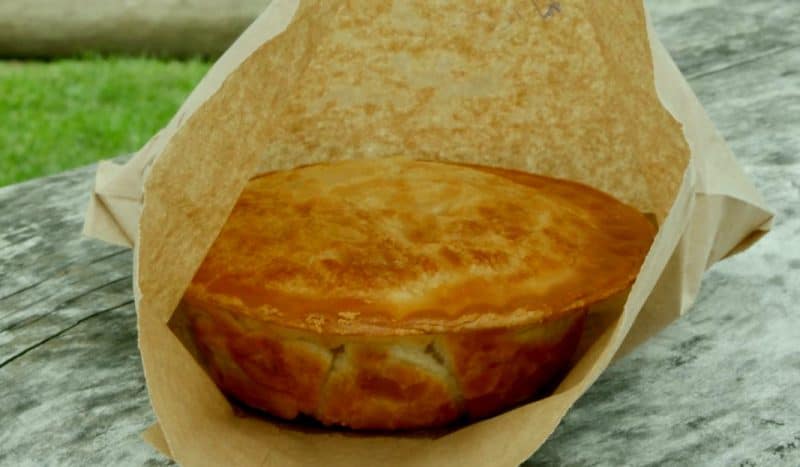
The pie arrives in a white paper bag. Sauce is free at most bakeries — tomato is standard, and it comes in a squeeze bottle on the counter or in small sachets. Some places have mustard and that is worth trying at least once. You eat the pie out of the bag. Not on a plate, not with a knife and fork — out of the bag, held in one hand, ideally while leaning against the car in a car park.
The experienced technique is to bite a hole in the top crust first and let the steam escape, because the filling temperature on a fresh pie is genuinely dangerous. We did not know this for our first year in New Zealand and have the mouth scars to prove it. The flat white is the standard companion. You buy the pie and the coffee at the same counter, carry both to the car, and you have a complete road-trip meal for under ten dollars. It is not elegant. It is not Instagram-worthy. It is perfect.
The Bakery Awards and Why People Care
New Zealand takes its pies seriously enough to hold a national competition, and the fact that this surprised us says more about where we came from than where we live now. The Bakels Supreme Pie Awards have been running since 1997, organised by Bakels New Zealand, and they attract hundreds of entries from bakeries across the country. There are categories for everything: mince and cheese, steak and cheese, chicken and vegetable, gourmet fruit, cafe boutique, and the supreme overall winner that gets a trophy and a year of bragging rights.
Winning the Supreme Pie Award is, for a small-town bakery, roughly equivalent to winning an Olympic medal. The trophy goes in the window. The local paper runs a front-page story. Customers drive from neighbouring towns to try the champion pie. We watched this happen with genuine fascination the first time a bakery near us won a category — the owner was interviewed on the radio, and he spoke about his steak and cheese with the technical precision and emotional intensity of someone describing a lifelong craft. Which, of course, it was.
For anyone who grew up in a culture where competitive cooking means televised chef battles and Michelin stars, the idea of a national award for the best pie in a paper bag is both wonderful and slightly unhinged. We mean that as the highest compliment. A country that cares this much about a meat pastry is a country that has its priorities exactly right.
Our Pie Opinions and We Are Not Sorry
The Supermarket Pie Versus the Bakery Pie
Let us be clear about something: not all pies are equal, and the line between a proper bakery pie and a mass-produced supermarket pie is not a subtle one. It is a chasm. The pies you find in supermarket chiller cabinets and petrol station warmers — Big Ben, Irvines, the generic house brands — serve a purpose. That purpose is 11pm, you are driving, everything is closed, and you need calories. For that specific situation, a two-dollar pie from the servo is acceptable. It is survival food.
Outside of that situation, there is no comparison. A mass-produced pie has pastry that tastes like cardboard wearing a disguise. The filling is mostly gravy with occasional suggestions of meat. The cheese, if present, exists as a concept rather than a flavour. A bakery pie made that morning is a different food entirely. The pastry has layers. The filling has texture and actual pieces of whatever the label claims. You can taste the difference between one bakery and another, which is the whole point — each bakery has its own recipe, its own ratios, its own personality.
We went through a phase, early in our NZ life, where we thought all pies were basically the same. This was because we had only eaten petrol station pies. The first time someone drove us to an actual bakery and bought us an actual mince and cheese made by an actual baker that morning, we understood. It was like the difference between instant noodles and hand-pulled lamian. Same category, different universe.
Planning a Pie Road Trip That Works
If you want to build a road trip around bakery stops — and we are here to tell you this is a completely reasonable thing to do — there are a few practical things worth knowing. Most bakeries open early, between five and six in the morning, and the best pies are gone by early afternoon. If you are driving for a specific bakery, aim to arrive before noon. Some regional bakeries close on Sundays or Mondays, and there is nothing sadder than driving ninety minutes to Sheffield on a Monday only to find the shutters down. Check before you go. A phone call takes thirty seconds and saves you the kind of disappointment that ruins a Tuesday.
The best pie road trips are built into drives you would take anyway. The Sheffield detour works because the inland Canterbury road is beautiful. Fairlie is on the way to Mount Cook. The Huntly stop is on the road to everywhere south of Auckland. You are not making a special trip for a pie — you are making the trip better by adding one.
We keep a mental list of bakeries we want to try, and we route our holidays to pass through their towns. Our family in China receives photos of pies almost as often as they receive photos of mountains, and they have stopped asking why. They know we have converted. We arrived in New Zealand with no idea what a pie was, and now we plan our holidays around them. If that is not a successful immigration story, we do not know what is.
Somewhere between the first bewildering pie at a Waikato petrol station and the twentieth deliberate detour to a Canterbury bakery, the conversion became permanent. We do not just eat pies on road trips now — we build road trips around pies, rearranging itineraries to pass through small towns at the right time of morning, keeping a running list of bakeries we have not tried yet. Our parents think we have become strange. They are probably right. But this is what happens when you move to a country that put this much craft and stubbornness into a food most of the world has never heard of. You stop resisting and you start planning your next stop.
3 Comments
The comparison between mince and cheese pies and jianbing or xiaolongbao is perfect — handheld food that everyone has an opinion about and that somehow becomes a marker of where you are from. That is exactly it. I have been here twelve years and I still remember my first pie at a BP in Hamilton. Thought it was going to be terrible, burned my mouth, went back for a second one. Also the lamian vs instant noodles analogy for bakery vs supermarket pies — spot on. Big Ben is survival food at best.
You have to try the pork belly pie at the Geraldine bakery if you have not already. And I reckon Sheffield is good but the queue puts me off in summer — drove through in January and there were maybe fifteen people waiting. My pick for Canterbury is actually Fairlie, the wild pork pie when they have it is unreal. Only complaint with this article is no mention of the Jimmy’s pies in Roxburgh? That is a South Island institution.
The bacon and egg pie being gone by ten is no joke. I tried to get one at our local bakery in Otahuhu at 10:15 last week and the lady just laughed at me. Sweet as article though, my family plans our road trips around food stops too so it is nice to see someone actually write about it properly instead of pretending you are supposed to eat at restaurants the whole time.