
Outrigger Motel Paihia – Bay of Islands Waterfront Base
First-hand review of the Outrigger Motel in Paihia -- waterfront location, self-contained kitchenette units, and why Paihia works as a Bay of Islands base.
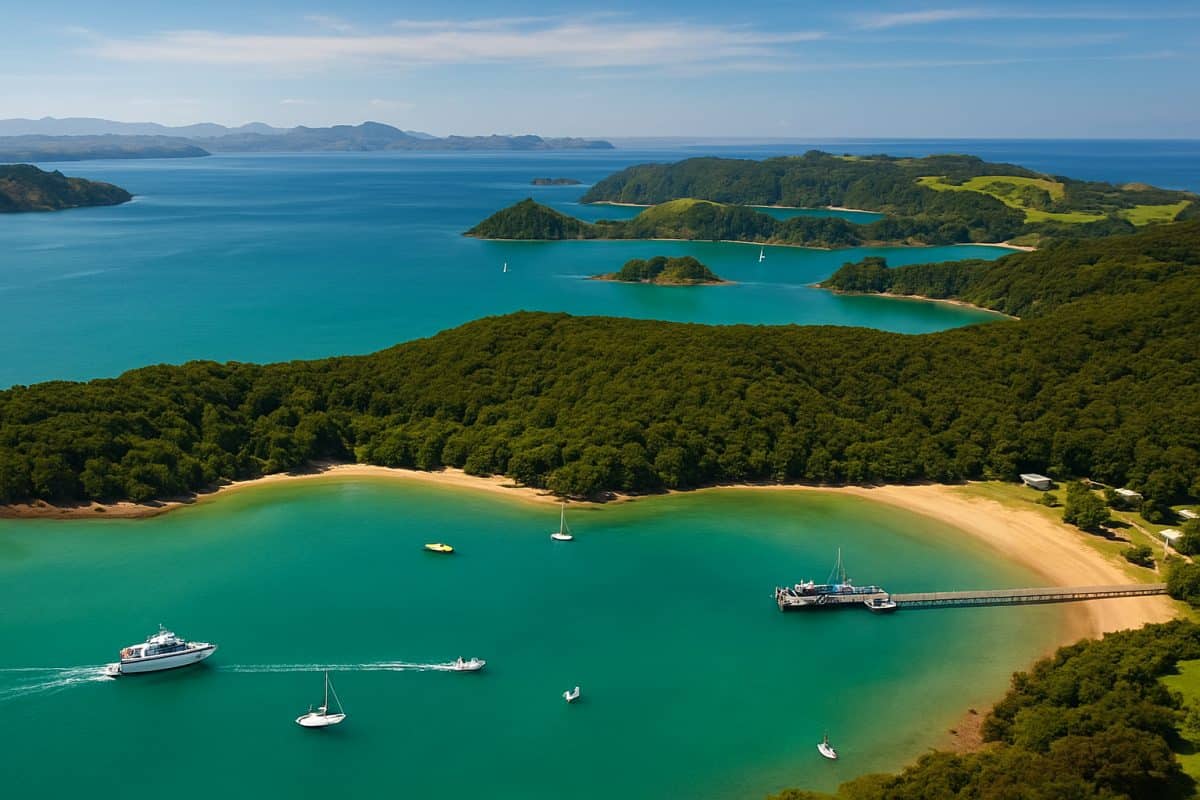
We booked the Outrigger Motel in Paihia because it was close to the wharf, had a kitchenette, and cost less than the places with infinity pools we could not justify. Three visits later, we keep coming back — not because it is the best motel in the Bay of Islands, but because it is the most useful one. Two minutes from the water, self-contained, and quiet enough to sleep with the windows open. Outrigger Motel (qiche lvguan) does what a Paihia base needs to do, and it does it without pretending to be something grander.
Williams Road and the Water
Two Minutes to the Wharf
The Outrigger Motel sits on Williams Road, which is the kind of Paihia address that sounds like it could be anywhere until you realise it is about a two-minute walk from the wharf. That proximity is the single most useful thing about the place. You step out the gate, turn toward the water, and within a few minutes you are standing where the ferries leave, where the tour boats load, where the whole Bay of Islands operation launches from every morning.
Paihia is small enough that the distinction between “waterfront” and “town centre” barely exists. The main strip of cafes and shops runs parallel to the beach, and the Outrigger is close enough to all of it that you never need to move the car once you have parked. The nearest cafe is a two-minute walk. The superette is not much further. But Williams Road itself is set back just enough from the busier stretch near the Maritime Building that you get the quiet without losing the convenience.
For us, that balance mattered. We had come up from Auckland with the car packed for a week, and the idea of hauling bags across a large resort property or hunting for parking every time we wanted dinner held no appeal. The Outrigger is the kind of place where you pull up, unload, and settle in.
What the Waterfront Actually Looks Like
The view from the Outrigger faces out across the water toward the bay, and it is the sort of view that earns its keep slowly. The first morning, you notice the boats. The second morning, you notice the islands behind the boats — Moturoa, Motumaire, the scattering of green shapes that give the Bay of Islands its name. By the third morning, you are watching the light.
Northland light is different from the rest of New Zealand. It is warmer, softer, and in the early morning it turns the water a colour that sits somewhere between silver and pale green. The bay is sheltered enough that the surface is often flat, and the reflections of the hills come through clearly. It is not dramatic in the way that, say, Milford Sound is dramatic. It is domestic and quiet and the kind of thing you stop noticing until you leave and then miss immediately.
From the motel, you can see the wharf activity — the cruise boats warming up, the kayakers heading out, the occasional yacht motoring past. Zuowei lai zi zhongguo de ren — as people who grew up surrounded by urban waterways in Guangzhou or Shanghai — there is something disarming about how uncrowded this stretch of coast is. The entire Bay of Islands has fewer people than a single apartment complex back home.
The Drive Up From Auckland
The drive from Auckland to Paihia takes about three and a half hours, almost all of it on State Highway 1. It is not a difficult drive, but it is a long one, and the scenery shifts enough along the way that you do not mind.
The first hour and a half is standard motorway — the Auckland sprawl thinning out past Orewa, then the rolling farmland through Warkworth and Wellsford. North of Wellsford, the road narrows and the landscape starts to change. The hills get rounder. The bush gets denser and greener. By the time you pass through Whangarei, the last proper city before Paihia, the air coming through the windows feels different — warmer, more humid, faintly subtropical.
The final stretch from Whangarei to Paihia runs through Kawakawa, a small town famous for its Hundertwasser-designed public toilets, which is the kind of New Zealand detail you cannot make up. Past Kawakawa, the road drops down toward the coast, and the first glimpse of the bay opens up through the trees. We remember our first drive up vividly — it was January, the pohutukawa were flowering red along the roadside, and somebody in the back seat said “zhe cai shi xinxilan” — this is the real New Zealand. They were not wrong. The far north has a quality that the rest of the country does not quite replicate.
The Rooms and What You Get
Self-Contained Units With Kitchenettes
The Outrigger runs self-contained units, which means each room comes with its own kitchenette, bathroom, and outdoor seating area. The kitchenettes are equipped with a microwave, fridge, stovetop, and basic cookware — enough to prepare proper meals rather than just heating something from a can. For us, and for plenty of Chinese travellers we know, this is not a nice-to-have, it is the reason you book the place. Being able to cook rice, steam vegetables, and make something familiar after a long day on the water matters more than any amount of thread count.
The rooms are clean, comfortable, and honestly decorated — they will not appear on a design blog, but they do not pretend to be something they are not. The beds are good. The bathrooms are modern enough. There is outdoor seating where you can sit with a cup of tea and watch the evening settle over the bay. Electric blankets are provided, which sounds unnecessary until you experience a Northland winter evening and realise that even the subtropical end of New Zealand gets cold after dark.
Pricing has historically sat in the mid-range for Paihia — expect to pay somewhere around the level of other central motels in the area, with rates climbing during the summer peak from December through February. It is not the cheapest bed in town, but the self-contained setup and the location justify what you are paying.
Parking, Wifi, and the Spa Pool
The practical details at the Outrigger are the kind of things that only matter when you are actually staying somewhere. Free parking is provided on site, which is worth noting because Paihia gets congested in summer and finding a park near the wharf can turn into an ordeal. Here, you leave the car and forget about it.
Free wifi covers all rooms — it is adequate for browsing and messaging, the kind of connection you expect from a New Zealand motel rather than a fibre-speed experience. There is a guest laundry, which matters if you are travelling for more than a couple of nights, and a private spa pool tucked near the barbecue area. The spa is not large, but after a day of walking around Waitangi or sitting on a boat in the wind, warm water and quiet is exactly what you want.
Sky TV is in the rooms, and there is tea and coffee provided. The reception desk operates from 8am to 7pm daily, and the staff are the kind of people who will book your dolphin cruise for you or tell you which fish and chip shop is actually good. Breakfast can be arranged on request, though most guests we spoke to preferred to sort themselves out with the kitchenette and the local bakery.
Using Paihia as Your Bay of Islands Base
Ferries, Dolphins, and the Hole in the Rock
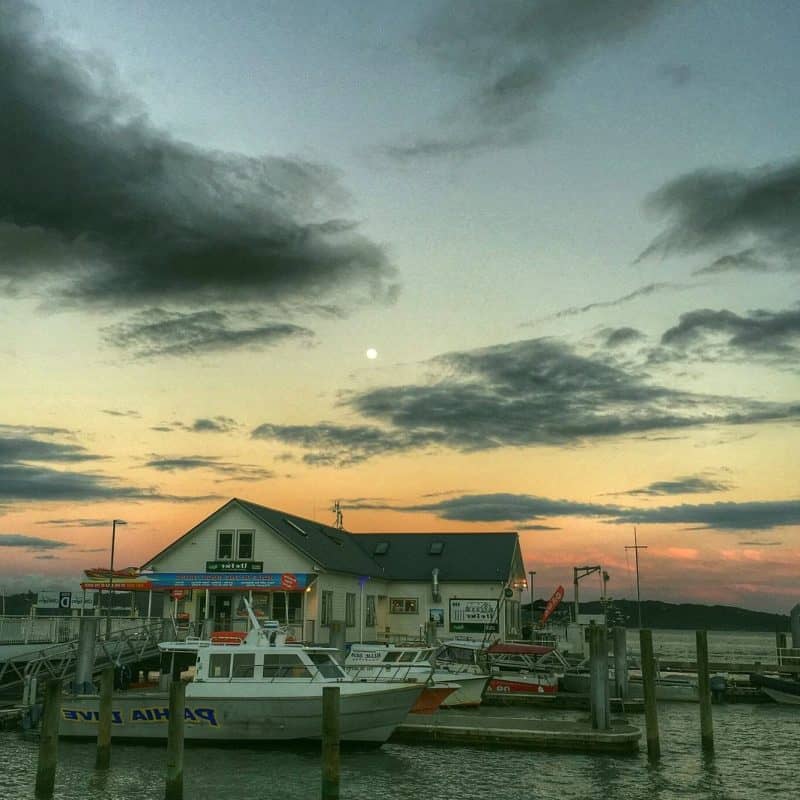
The Paihia wharf is the departure point for almost everything that happens on the water in the Bay of Islands, and the Outrigger puts you close enough to walk there in the time it takes to finish a conversation. Fullers runs the ferry to Russell — a pretty fifteen-minute crossing to the historic township on the other side of the bay — and the same company operates the Hole in the Rock cruise, which takes you out through the islands to a natural rock arch at Cape Brett. The cruise runs about five hours and covers enough of the bay to make you understand why Captain Cook named it.
Dolphin cruises leave from the same wharf, and bottlenose dolphins are common enough in the bay that most trips see them. There are also fishing charters, parasailing operators, and kayak hire within a short walk. The point is not that you need to do all of these things — nobody does — but that having the wharf within walking distance means you can be spontaneous about it. Book a morning cruise the night before, walk down, and be back at the motel for lunch.
We took the Russell ferry on our second day and wished we had done it on the first. Russell is beautiful, quiet, and has a quality of light that makes you want to sit on the waterfront and do nothing productive for several hours.
Waitangi Is Around the Corner
The Waitangi Treaty Grounds are a five-minute drive north from the Outrigger, or about twenty minutes on foot along the coastal track that runs from Paihia around the headland. That walk, incidentally, is one of the best short tracks in Northland — it follows the shoreline through pohutukawa and nikau, with the bay on one side and birdsong overhead, and it deposits you at the Treaty Grounds entrance in a state of mind that is actually appropriate for what you are about to see.
Waitangi is where Te Tiriti was signed in 1840 — the document that established the relationship between Maori and the Crown, and that continues to shape New Zealand politics, law, and identity. For Chinese New Zealanders, spending time at Waitangi carries a particular weight. Understanding this country means understanding the Treaty, and understanding the Treaty means standing in the place where it happened and reading the different versions and hearing what the guides have to say about what was promised and what was delivered.
The grounds include the Treaty House, the whare runanga (meeting house), and the world’s largest ceremonial waka. Allow a half day. The cultural performances are worth timing your visit around, and the grounds themselves are extensive enough that rushing through them defeats the purpose. We went in winter, when the crowds were thin and the guides had time to talk, and it was one of the most worthwhile mornings we have spent anywhere in the country.
Evenings in Paihia
Paihia does not have a nightlife scene. If you are looking for cocktail bars and live music, you have come to the wrong latitude. What it does have is a string of waterfront restaurants, a couple of solid fish and chip shops, and a beach that faces west — which means sunsets.
The evening routine we settled into was simple: buy fish and chips from one of the shops near the wharf, walk them down to the beach, and eat while the sun went down over the water. Paihia sunsets are good. Not good in the way people say “the sunset was good” to fill a silence, but genuinely, memorably good — the kind where the sky turns colours you did not think skies turned and the water reflects all of it back.
For self-catering nights, the Four Square on the main road has enough supplies to put a decent meal together, and the kitchenette at the Outrigger makes that easy. There are also a few restaurants worth sitting down in — Alfresco’s on the waterfront does reasonable seafood, and there are enough options along the strip that you will not eat the same thing twice in a week.
The quiet is the point. After a day on the water or at Waitangi, Paihia in the evening feels like exactly the right amount of town. Not too much. Not too little. Just enough to eat well and sleep well and wake up ready for the bay.
The Outrigger is not the kind of place you travel to Paihia for. It is the kind of place that makes travelling to Paihia easy. A clean room, a kitchenette that works, a view of the water, and a two-minute walk to whatever you came to the Bay of Islands to do. In a region where the real attractions are the bay, the islands, and the Treaty Grounds, a motel that puts you close to all of them and then gets out of the way is worth more than one that tries to be the destination itself.