Alpine Recreation – Guided Treks Into the Heart of Aoraki Mount Cook
Guided alpine treks into Aoraki/Mount Cook with Alpine Recreation. Day walks to the Ball Pass Crossing, NZMGA-certified guides who know every ridge.
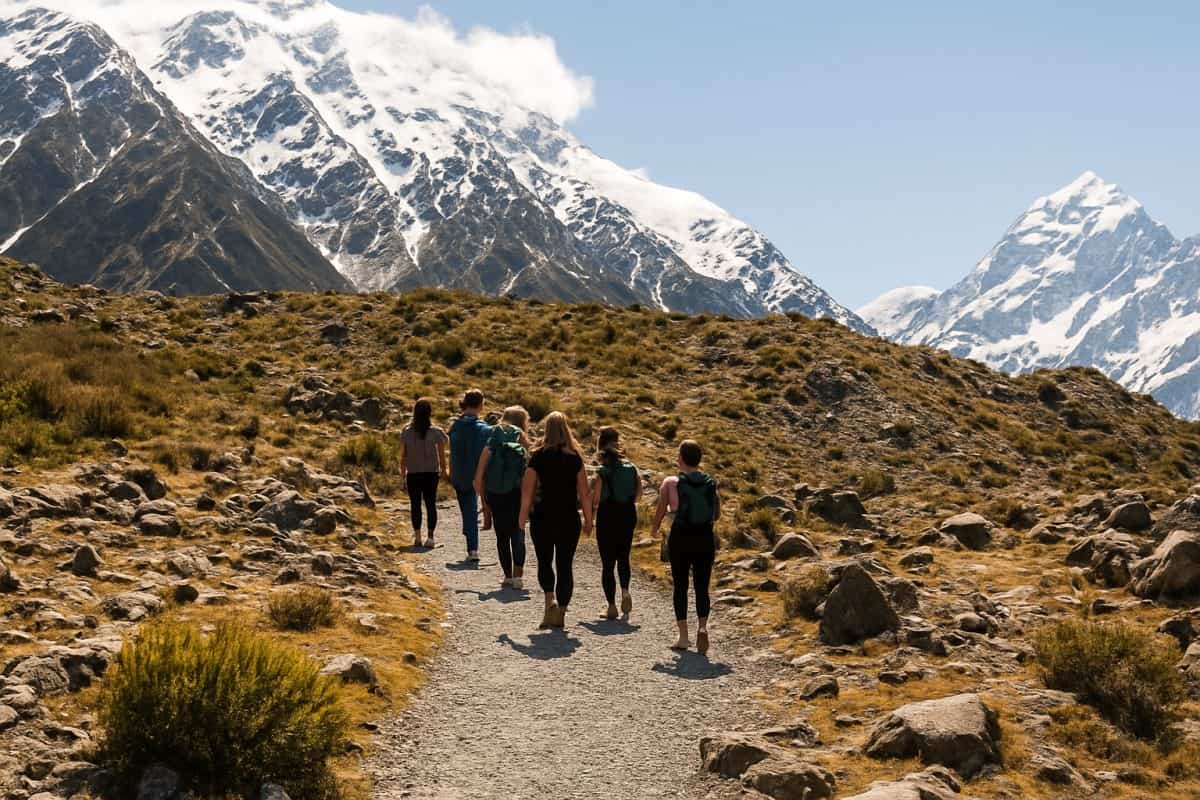
We have walked a lot of tracks in the South Island, but the first time a guide pointed to a snow route above the Tasman Glacier and said “that is where we are going,” something shifted. Aoraki/Mount Cook is the mountain every New Zealand visitor photographs from the highway. Alpine Recreation is the company that takes you off the highway and into the range itself — guided treks through terrain that most people never realise they can access without being a mountaineer.
Mountains That Require Introduction
The Scale of the Place
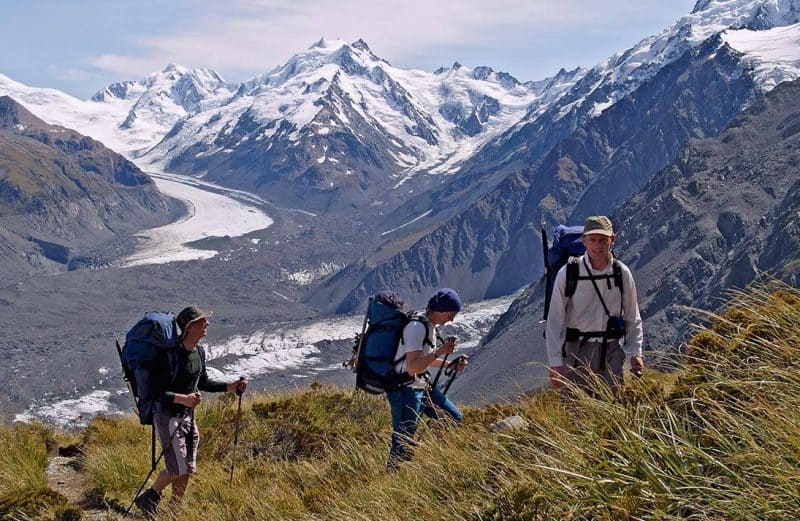
Aoraki/Mount Cook stands 3,724 metres above sea level, and from the valley floor it does not look real. It looks like someone has placed a wall of rock and ice across the end of the world. The Southern Alps here are not the gentle green hills of the Waikato or the bush-clad ranges around Wellington — this is raw geology, the kind of terrain where glaciers have spent millennia grinding valleys out of granite. The Tasman Glacier alone stretches 23 kilometres down from the divide, a river of ice so vast that the terminal lake at its foot is still growing as the glacier retreats.
We have driven the road into Mount Cook Village half a dozen times, and every trip the scale catches us off guard. You spend three hours crossing the Canterbury Plains and the Mackenzie Country, watching the mountains build on the horizon, and then you round the final bend above Lake Pukaki and the whole range hits you at once. The peaks, the snowfields, the icefall hanging off the Hochstetter face. It is not polite country. It does not invite you in. It simply exists, at a scale that makes your rental car feel like a toy.
Why Most People Only See the Car Park
Here is the thing about Aoraki/Mount Cook National Park: most visitors experience it from below. They drive the highway, they park at the Hermitage Hotel, they walk the Hooker Valley Track — which is a lovely walk, to be fair, well-maintained and accessible — they photograph the swing bridges and the terminal lake with the icebergs, and they drive away. They have seen the mountains. They have not been in them.
The difference matters. Standing at the Hooker Lake lookout, you are at about 760 metres. The summit of Aoraki is three vertical kilometres above you, and everything between your position and the top is a world you cannot access on foot without knowing what you are doing. The ridges, the moraines, the snowfields, the high valleys where chamois pick their way across scree — none of that is visible from the valley floor. You need someone who knows the terrain to take you there, someone who can read the snow conditions, assess the weather rolling in from the Tasman Sea, and make the call on whether today is a day for the ridge or a day for the valley.
Aoraki in Chinese — the Mountain We Came to See
Aoraki means “cloud piercer” in te reo Maori, and that name does exactly what names should do — it tells you what the mountain is. Yun Chuan Feng — the peak that pierces clouds. For those of us who grew up with Chinese mountain traditions, where peaks are named for what they do to the sky and the weather, the Maori name resonates in a way that “Mount Cook” never quite does.
We remember seeing Aoraki for the first time in a university prospectus, years before any of us had set foot in New Zealand. A photograph of the mountain at dawn, pink light on the neve, the kind of image that makes a country feel like a promise. Many Chinese who came to New Zealand in the 2000s and 2010s carried some version of that image with them — the Southern Alps as the landscape that proved they were somewhere genuinely different. When you finally stand beneath it, the mountain is both exactly what you expected and nothing like the photograph. It is louder than photos suggest — the wind, the rockfall, the crack of ice calving somewhere above. And it is colder. Always colder than the brochure implied.
What Alpine Recreation Actually Does
A Guiding Company, Not a Tour Operator
Alpine Recreation is not a tour operator with a fleet of buses and a gift shop. It is a guiding company — a small outfit staffed by people who climb mountains for a living and take others into the mountains because that is what they know how to do. Based near Lake Tekapo, on the eastern edge of the Mackenzie Country, they have been operating in the Aoraki/Mount Cook region for decades, building the kind of intimate knowledge that only comes from spending thousands of days in the same range.
The distinction between a guide and a tour leader matters more than most people realise. A tour leader follows a fixed itinerary, sticks to formed tracks, and manages logistics. A mountain guide reads terrain, makes real-time decisions about route and safety, carries rescue equipment, and possesses technical skills in rope work, crevasse rescue, and avalanche assessment. When you trek with Alpine Recreation, you are not on a tour. You are in the mountains with a professional who has the skills to get you safely into places you could not reach alone.
The Range of Trips on Offer
The trip options range from single-day alpine walks to multi-day hut-based treks and dedicated mountaineering courses. At the accessible end, day walks take you into the Tasman Valley or onto terrain above the main tourist tracks — proper mountain walking, not the groomed paths around the village. You still need decent fitness and sturdy boots, but you do not need prior alpine experience.
Step up from there and you reach the multi-day guided treks, where things get serious in the best possible way. The Ball Pass Crossing is the flagship — a two-to-three-day traverse through the heart of the range. Beyond that, there are glacier travel courses where you learn to use crampons and ice axes on actual glacier ice, and winter ski touring trips for those who want the mountains in their coldest, quietest season. The menu is deliberately structured so that a fit walker with no mountaineering background can start with a day trip, discover they love it, and progress to the multi-day options as their confidence and fitness allow.
What NZMGA Certification Means for You
NZMGA stands for the New Zealand Mountain Guides Association, and if those letters are on your guide’s credentials, they mean something specific. This is not a weekend outdoor recreation certificate. NZMGA certification requires years of training, extensive logged mountain time, rigorous assessment by senior guides, and ongoing professional development. The qualification is internationally recognised under the IFMGA (International Federation of Mountain Guides Associations) framework — the same standard that certifies guides in the Alps, the Himalayas, and the Andes.
For those of us who did not grow up in New Zealand’s tramping culture, this context is useful. NZ has a strong tradition of amateur mountaineering — people heading into the hills with mates and learning on the job. That tradition is admirable, but it is also why New Zealand has mountain rescue callouts every season. When you walk with an NZMGA-certified guide, you are with someone who has trained specifically for the terrain you are entering. They know the crevasse patterns on the Tasman Glacier, they understand how nor-west conditions build dangerous snow loading, and they have practised hauling people out of holes in the ice. Your safety is not casual. It is the product of a professional system.
The Ball Pass Crossing and Other Trips Worth the Effort
Ball Pass Crossing — The Signature Trek
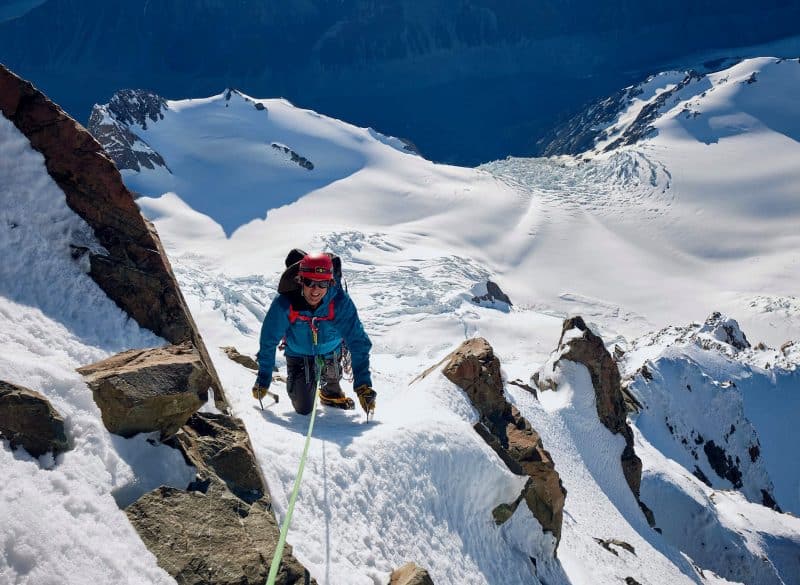
The Ball Pass Crossing is the trek that puts Alpine Recreation on the map, and for good reason. It crosses from the Tasman Valley to the Hooker Valley via Ball Pass, at around 2,200 metres — a route that takes you through terrain most Mount Cook visitors do not even know exists. Over two to three days, you walk across glacial moraines, navigate boulder fields, climb to the pass itself, and descend through country that feels genuinely remote despite being less than ten kilometres from the village as the kea flies.
The pass itself is the centrepiece. You climb steadily through the morning, the terrain shifting from moraine rubble to snow, the air thinning in a way that reminds you how high 2,200 metres actually is when you started at 700. And then you reach the saddle, and the view opens. Aoraki to the north, the full sweep of the Hooker Glacier below, the Liebig Range running south, and on a clear day, the Tasman Sea glinting on the western horizon. We have seen a lot of New Zealand viewpoints. This one is different. You earn it, and the earning is part of what makes it land.
Day Walks and Shorter Options
Not everyone is ready for two days on a mountain pass, and Alpine Recreation knows this. Their day walk options take you into genuine alpine terrain without the commitment of a multi-day trip. These are not the Hooker Valley Track with a guide tacked on — they go higher, further, and into areas where you would not venture alone without experience.
A guided day in the Tasman Valley, for example, might take you onto the lateral moraine above the glacier lake, where the scale of the retreating ice becomes apparent in a way it never does from the road-end lookout. Or up onto the lower ridges where the tussock gives way to scree and the village below shrinks to a cluster of rooftops. These walks suit Chinese-NZ families visiting the Mackenzie Country who want more than the standard tourist loop, or anyone whose fitness and schedule favour a single challenging day over a multi-day commitment. You will still be tired at the end. You will still have seen things that the car park crowd did not. But you will be back for dinner.
What You See That Independent Walkers Miss
Guided travel in this kind of terrain gives you access to places and knowledge that no amount of independent tramping skill can replicate — at least not without years of building local experience. The guides know which moraine ridges are stable and which are actively calving rubble. They know the gully that catches the morning light in a way that turns the ice blue. They know where the chamois graze at dawn, where the kea will likely show up to investigate your lunch.
More than that, they adjust. An independent walker commits to a track and follows it. A guide reads the day — the cloud building over the divide, the wind direction, the snowpack condition — and makes decisions that optimise what you see and how safely you see it. On a day when the nor-wester is hammering the main ridge, a guide might swing the route to a sheltered valley that offers a completely different perspective. You are not on rails. You are with someone who knows the mountain well enough to improvise, and that improvisation often produces the moments you remember longest: the unexpected clearing in the cloud, the waterfall you would never have found, the angle on Aoraki that makes you put the camera down because a photo cannot hold it.
Before You Lace Up
Fitness, Gear, and What to Expect
Alpine Recreation is straightforward about fitness requirements, and we appreciate the honesty. For day walks, you need to be comfortable walking six to eight hours on uneven ground with a daypack. That means hill walks, not flat pavement — if your regular exercise is the gym or city jogging, spend a few weeks on hilly trails before you book. For the Ball Pass Crossing, the bar is higher: you should be able to manage sustained uphill walking with a pack, handle loose terrain confidently, and have the stamina for consecutive long days.
Technical gear — crampons, ice axes, harnesses, helmets — is provided by Alpine Recreation. You bring your own boots (sturdy, ankle-supporting, broken in), your own layered clothing system, and your own acceptance that weather in the Southern Alps changes without consultation. A morning that starts in sunshine can deliver rain, hail, or snow by lunchtime. Bring a waterproof shell, bring warm layers, bring gloves even in summer. The guides will brief you on exactly what to pack, but the golden rule is this: if you are wondering whether to bring the extra fleece, bring it.
Getting There and When to Go
Alpine Recreation operates from a base near Lake Tekapo, which sits about three hours south of Christchurch on State Highway 8. The drive itself is one of the better ones in Canterbury — you cross the plains, climb Burkes Pass into the Mackenzie Country, and the landscape shifts from farmland to tussock to that particular golden-brown emptiness that makes the Mackenzie feel like another country. Lake Tekapo appears turquoise and improbable below the road, and the mountains fill the western sky.
Most guided treks run between October and April, when conditions are most reliable and the high passes are accessible. Winter brings ski touring options for those with the skills and appetite for cold. Booking in advance is essential — group sizes are small by design, and the popular trips fill months ahead, particularly the Ball Pass Crossing over summer. If you have flexibility, consider the shoulder seasons. October and November bring snow still lying on the passes and fewer people on the trails. March and April offer stable autumn weather and the tussock turning gold. Either way, the Mackenzie Country rewards anyone willing to drive the three hours from Christchurch. The mountains at the end of the road are worth every kilometre.
There is a moment on the Ball Pass Crossing, somewhere above the moraine and below the snow, when you look back at the valley you started from and realise you can no longer see the car park, the hotel, or the tourist track. Everything below has disappeared into scale. What remains is rock, ice, sky, and the sound of your own breathing. That is the version of Aoraki/Mount Cook that Alpine Recreation gives you — not the one you photograph from the road, but the one you carry home in your legs and your lungs.
2 Comments
Did the Ball Pass Crossing with Alpine Rec about three years ago and this article nails it. That moment when you top out on the pass and the Hooker Glacier opens up below you — you genuinely cannot prepare for it, no matter how many photos you have seen. One thing worth mentioning is the fitness requirement is real. I thought I was fit from day tramping in the Tararuas but consecutive days at altitude with a pack is a different beast. Spend a few months on hills before you book, not a few weeks.
Good shout on the NZMGA certification explanation. I think a lot of people do not realise the difference between a certified mountain guide and someone with a weekend outdoor rec cert. We used Alpine Rec for a day walk in the Tasman Valley last March and our guide knew exactly which moraine ridges were stable, where the kea would show up, everything. Worth every dollar. The shoulder season tip is solid too — we had the place almost to ourselves.