Holiday Parks New Zealand – A Guide to Camping and Cabin Stays
A first-hand guide to New Zealand holiday parks covering accommodation types, facilities, booking tips, and why they are the best way to travel NZ.
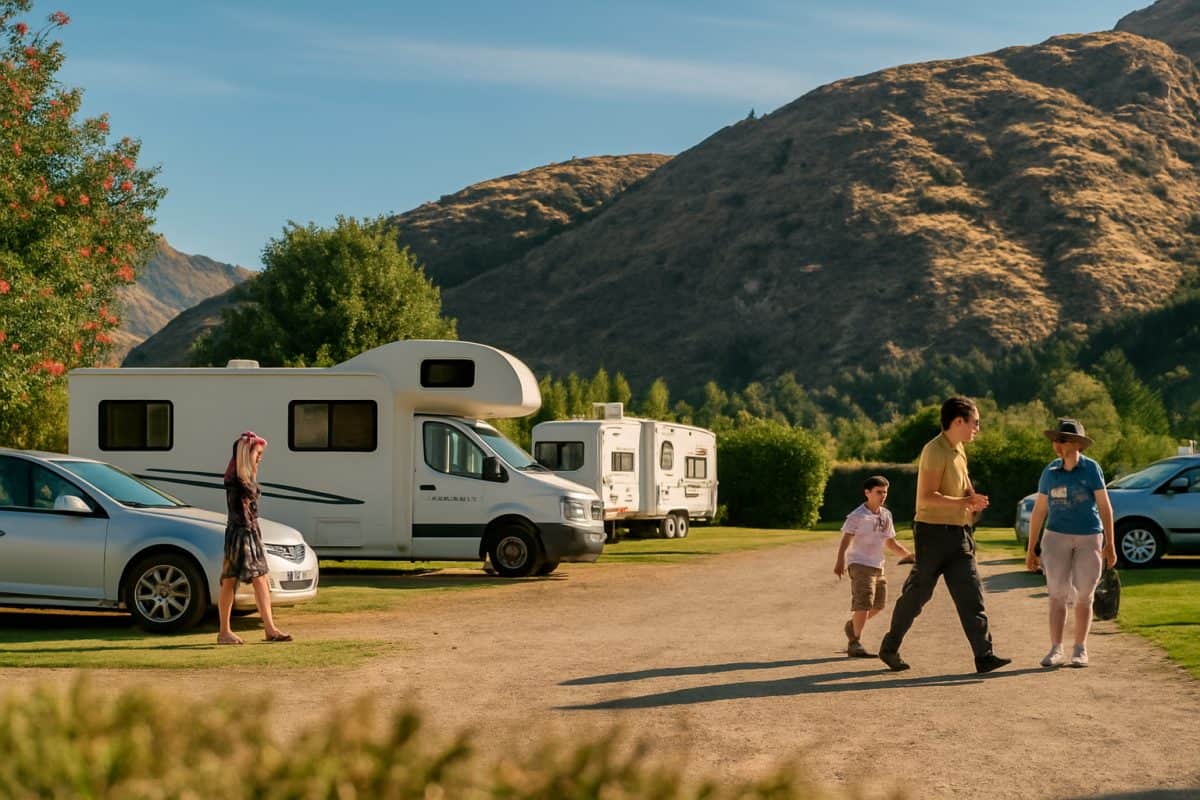
Holiday parks are one of those New Zealand institutions that make perfect sense once you have stayed in one and almost no sense when someone tries to explain them from a distance. Part campground, part cabin village, part open-air community — they are where Kiwi families have spent their summers for generations, and they are one of the best ways for anyone exploring this country to stay close to the landscapes that make the trip worth taking. We arrived in New Zealand with no concept of what a holiday park was. A decade and dozens of stays later, we cannot imagine travelling here without them.
What Exactly Is a Holiday Park
The Concept That Does Not Translate
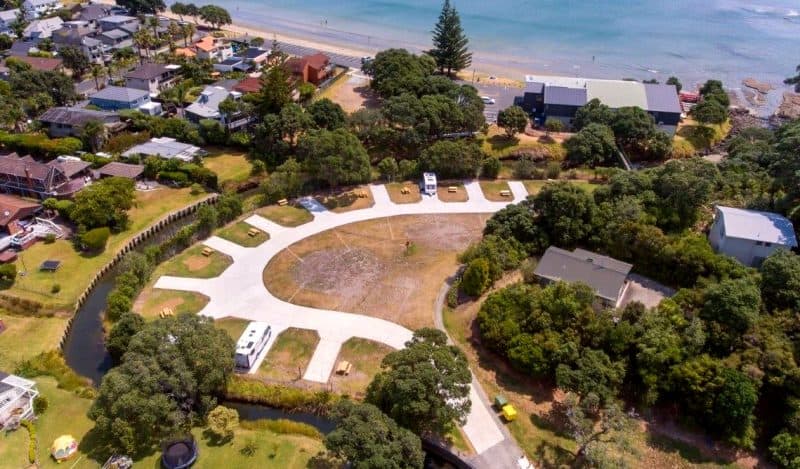
Try explaining a holiday park to your parents back in China and watch the confusion unfold. “So it is a hotel?” No. “A campground?” Not exactly. “You sleep in a cabin but share a kitchen with strangers?” Now you are getting closer. The truth is, holiday parks occupy a category that simply does not exist in the Chinese accommodation landscape. There is no equivalent in the lujing (travel) vocabulary we grew up with — no neat phrase that captures this peculiar Kiwi invention where tents, campervans, basic cabins, and self-contained motel units all coexist in the same fenced property, sharing the same kitchen block and the same patch of sky.
The closest Chinese concept might be nongjiayuan (farmstay), but that misses the point entirely. Holiday parks are not rustic retreats. They are a mainstream accommodation category — families, retirees, backpackers, and road-trippers all use them without a second thought. In New Zealand, staying at a holiday park does not signal that you cannot afford a hotel. It signals that you understand how travel works here: you want to be close to the beach, the track, or the lake, and you would rather spend your money on experiences than on a room you will only sleep in.
For us, the first holiday park stay was a revelation. We had booked a cabin in Kaikoura because the motels were full over summer. We arrived expecting something temporary and slightly uncomfortable. What we found was a community — kids on bikes, someone barbecuing crayfish two sites over, and a kitchen where a retired couple from Invercargill taught us how to make whitebait fritters.
A Brief History of Kiwi Camping Culture
New Zealanders have been sleeping outdoors in organised campgrounds since the early twentieth century, long before anyone thought to brand the experience. The tradition grew from a practical reality: this is a country where the best places — the beaches, the lakes, the mountain edges — are often a long drive from the nearest town. Kiwis needed somewhere to stay that was affordable, flexible, and close to the landscape they came to see. Camping grounds filled that gap.
By the 1960s and 70s, motor camps had become a fixture of the New Zealand summer. Families packed the car with sleeping bags and a chilly bin, drove to their regular camp, and stayed for weeks. The motor camp was not a fallback option — it was the holiday. Kids ran feral between sites while parents played cards and argued about the best fishing spots. These camps were basic: a patch of grass, a communal toilet block, maybe a kitchen if you were lucky.
The rebrand to “holiday park” came later, as operators upgraded facilities and widened the accommodation range beyond tent sites. Cabins appeared. Then motel-style units. Then jumping pillows and heated pools. The industry body — Holiday Parks New Zealand, formerly the Holiday Accommodation Parks Association — helped standardise quality expectations across the network. But the cultural core remained the same: this is where New Zealand goes on holiday, and the experience is as much about the shared spaces as the private ones.
How Holiday Parks Compare to Hotels and Motels
The question we get asked most often by visiting friends: why not just book a hotel? Fair question. Here is the honest comparison.
Hotels give you a room, a bathroom, maybe a breakfast buffet, and a door you close against the world. In most NZ towns outside Auckland and Queenstown, the hotel options are limited — you are often choosing between a corporate chain that could be anywhere on earth and a character lodge that charges accordingly. Motels are more common and more useful: self-contained units with a kitchenette, parking at your door, and decent value. We have stayed in dozens and have no complaints.
But holiday parks offer something neither hotels nor motels can match: range within a single property. You can pitch a tent for twenty dollars a night or book a self-contained unit with an ensuite and a kitchen for a hundred and twenty. A family of six can stay affordably in a cabin where they would need two hotel rooms. A couple in a campervan can plug in to a powered site and use the park showers and kitchen. Everyone shares the same grounds, the same barbecue area, the same playground.
The other advantage is location. Holiday parks tend to sit on the best real estate in town — waterfront, bush-edge, mountain-view. Hotels sit where the commercial zoning allows. When you wake up in a holiday park cabin in Wanaka and the lake is thirty metres from your door, the comparison becomes academic.
What You Will Find When You Arrive
Powered and Unpowered Sites
The first distinction you will encounter when booking is between powered sites and unpowered sites. A powered site gives you an electrical hookup — a post or bollard with a standard NZ plug where you can connect your campervan, caravan, or motorhome. This means you can run your fridge, charge devices, use a heater on cold nights, and generally live with the comforts of home while parked on grass.
Unpowered sites are just a patch of ground. You bring your tent, you bring your gear, and the park provides access to shared facilities — toilets, showers, the kitchen block. The price difference is significant: an unpowered tent site might run fifteen to twenty-five dollars per person per night, while a powered site is thirty to fifty dollars for the site itself regardless of how many people you have.
For those of us who started our NZ camping careers with a two-person tent from Warehouse and a foam sleeping mat, unpowered sites were the entry point. There is something about lying in a tent listening to the rain on the fly while the Tasman Sea roars a hundred metres away that makes you feel appropriately small. As our camping kit has improved — a better tent, a gas cooker, actual camp chairs — we have graduated to powered sites with a campervan, which is a different experience entirely. You park, plug in, slide the door open, and you are home. The campground is your neighbourhood.
Cabins Units and Everything In Between
This is where holiday parks start to look like accommodation shapeshifters. The range of roofed options in a single park can be staggering, and the terminology varies just enough between parks to keep you guessing.
At the basic end, a standard cabin (sometimes called a basic cabin or tourist cabin) is a small room with bunks, a heater, and not much else. You bring your own bedding, walk to the shared kitchen, and use the communal bathrooms. Think of it as a tent with walls and a lockable door. Prices sit around sixty to ninety dollars a night.
Step up and you reach ensuite cabins — same compact footprint but with a private bathroom attached. Some have a small fridge and kettle. Others add a microwave. These run from ninety to a hundred and forty dollars depending on the park and the season.
At the top of the range, motel units and self-contained units are essentially what you would get at an independent motel: a full kitchen or kitchenette, private bathroom, a separate bedroom or two, linen provided, and your own entrance. The difference is that you are paying holiday park prices — typically a hundred to a hundred and eighty dollars — while being twenty steps from a playground and a communal barbecue.
Some parks also offer glamping options: canvas bell tents, tiny houses, converted railway carriages. These are the newer additions, aimed at travellers who want the campground atmosphere without sleeping on the ground. We have tried a few. They are charming, occasionally draughty, and always more photogenic than practical.
Communal Kitchens and the Art of Shared Cooking
The communal kitchen is the social heart of any holiday park, and it took us a while to get comfortable with it. In China, cooking is an intensely private activity — your kitchen is your domain, your wok is seasoned to your hand, and the idea of preparing dinner next to a stranger from Palmerston North was, initially, deeply strange.
But the camp kitchen has its own logic, and once you understand it, the system works beautifully. Most park kitchens provide gas or electric hobs, ovens, microwaves, toasters, kettles, and basic cookware — pots, pans, utensils, sometimes even a rice cooker (we always bring our own, just in case). Bench space is shared. There is an unspoken choreography: you claim a burner, cook efficiently, wash up immediately, and wipe down your area.
The kitchen is also where you learn things. We have picked up recipes from Dutch tourists, discovered that New Zealanders put beetroot on everything, and had our dumpling-folding technique admired by a woman from Timaru who then taught us her scone recipe. There is a democracy to shared cooking that hotels can never replicate.
Bring your own basics: oil, salt, soy sauce, and whatever spices you cannot live without. The kitchens provide the infrastructure but not the pantry. We travel with a small box of staples — sesame oil, chilli flakes, garlic — that turns any camp kitchen into home.
Facilities Beyond the Basics
Modern holiday parks have evolved well beyond a kitchen and a toilet block. The better parks now operate like small villages, and the facilities list can be surprisingly long.
Laundry rooms with coin-operated washers and dryers are standard. Most parks have at least one barbecue area with gas barbecues — sometimes covered, sometimes open-air. Many have a TV lounge or games room, which becomes the default gathering spot on rainy evenings. Trampolines, playgrounds, and swimming pools appear at the family-oriented parks, and some of the larger operations have added spa pools, mini-golf courses, and even waterslides.
Wi-Fi is available at most parks now, though the speed and data limits vary wildly. Do not expect to stream video comfortably — it is connection enough to check maps, message family, and upload a photo or two. Some parks charge extra for internet access above a basic free tier.
The less glamorous but equally important facilities: dump stations for campervan waste, drying rooms for wet tramping gear, secure storage for bikes and kayaks, and information boards with local walking tracks and tide times. A few parks operate small shops selling milk, bread, ice creams, and emergency supplies like forgotten toothbrushes. It is not a supermarket, but it has saved us more than once when we underestimated how far the nearest town would be.
Choosing the Right Park for Your Trip
Top 10 Holiday Parks and What the Brand Means
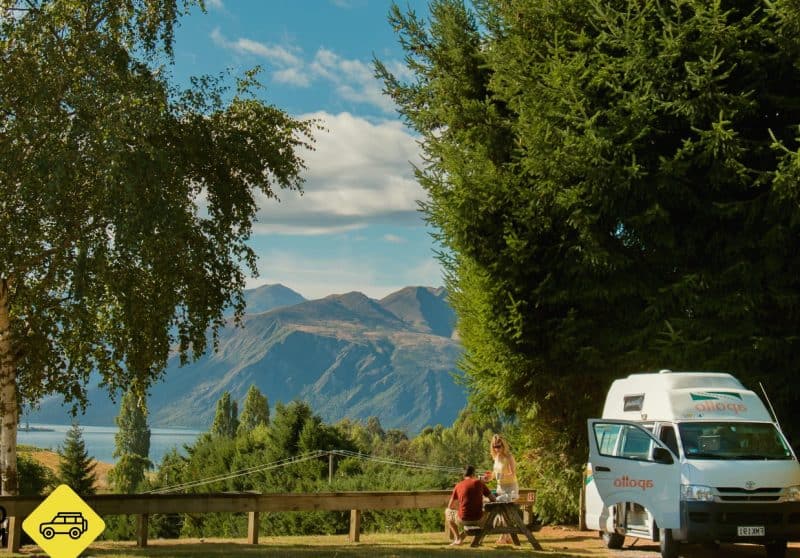
You will see the Top 10 Holiday Parks brand everywhere in New Zealand — the green and blue logo on signage from Paihia to Bluff. Top 10 is not a ranking. It is a membership network, a chain of independently owned parks that meet a set of quality standards and pay to use the brand. Think of it as a franchise model: each park is different, but they all guarantee a minimum level of facilities, cleanliness, and service.
The Top 10 network covers over sixty parks across both islands. Membership in the Top 10 rewards programme gets you ten percent off accommodation at any park in the network, which adds up quickly if you are doing a multi-stop road trip. The programme is free to join and available to international visitors.
What the Top 10 brand signals to you as a traveller: the park has been inspected, the facilities will be maintained, and there will be a reception desk with someone who can answer questions about the area. It does not mean every Top 10 park is identical — some are stunning waterfront properties with heated pools, others are functional and well-kept without being remarkable. The brand is a floor, not a ceiling.
We have stayed at Top 10 parks that felt like resorts and Top 10 parks that felt like very nice campgrounds. Both were fine. The consistency of the brand means you are unlikely to arrive somewhere genuinely substandard, which matters when you are booking a park you have never visited in a town you have never been to.
Independent Parks and DOC Campgrounds
Outside the Top 10 network, New Zealand has hundreds of independent holiday parks that operate under their own names and set their own standards. Some are excellent — family-run operations where the owners live on-site and know every guest by name. Others are basic but perfectly adequate for a one-night stop on a long drive. The independent parks often have the best locations because they predate the franchise networks: a beachfront site in Coromandel, a bush-edge spot in the Catlins, a lakeside property in Taupo that has been in the same family for three generations.
Then there are DOC campgrounds — the Department of Conservation runs over 200 camping areas across New Zealand, many of them in national parks and conservation land. These are a different proposition entirely. A basic DOC campsite gives you a long-drop toilet and maybe a water tap. A standard DOC campsite adds a kitchen shelter and cold showers. The scenery is almost always extraordinary because DOC manages the most spectacular conservation land in the country.
DOC sites run from free (basic backcountry sites) to around fifteen dollars per adult per night for serviced campgrounds. They do not have cabins, powered sites, or the facilities of a commercial holiday park. What they have is location: imagine camping beside Lake Mavora with nobody else for a kilometre in any direction, or waking up at Totaranui in Abel Tasman with golden sand outside your tent. For experienced campers who carry their own gear, DOC sites are hard to beat.
Peak Season Booking and the Summer Scramble
Here is the thing about New Zealand holiday parks that catches first-timers off guard: the good ones book out. Not weeks in advance — months in advance. If you want a cabin at a popular park over Christmas and New Year, you need to be booking by August or September. The prime spots — anything coastal, anything near a Great Walk, anything in Queenstown or Wanaka — fill up for the entire December-to-February peak season well before summer arrives.
The school holidays drive the calendar. New Zealand schools break for summer from mid-December to late January, and this is when Kiwi families hit the road en masse. Labour Weekend in late October is the unofficial start of the camping season. Easter is another pinch point. If your travel dates overlap with any of these periods, book early or prepare to be flexible about where you stay.
The shoulder seasons — March to April and October to November — are a different story. Parks are quieter, rates drop, and you can often book a week ahead or even walk in without a reservation. Some of the best holiday park experiences we have had were in autumn, when the campground was half-empty and the park owners had time to chat about the area.
Winter is the forgotten season for holiday parks. Many parks stay open year-round, especially in the South Island ski towns and the North Island thermal regions. A cabin near Ohakune or Hanmer Springs in July is a perfectly viable base for a winter trip, and you will have the kitchen block to yourself.
Making It Work as a First-Timer
What to Pack and What to Leave Behind
We have refined our holiday park packing list over many trips, and the principle is simple: bring the things the park does not provide, leave behind anything you can borrow or buy.
Bring: your own pillow (camp pillows are universally terrible), a good sleeping bag or your own linen if you are staying in a basic cabin, a small torch for nighttime toilet trips, jandals for the shared showers, a reusable shopping bag for groceries, and a power board with a long extension cord if you are camping in a powered site. A small clothesline or pegs are worth their weight when you need to dry towels. Insect repellent is essential anywhere north of Christchurch between November and March — sandflies are real and they are relentless.
Leave behind: full-sized towels if you are in a motel unit (linen is provided), excessive cooking equipment (the kitchen has pans and pots), and the expectation of silence. Holiday parks are not quiet retreats. There will be kids, there will be birds at 5am, and there will be at least one neighbour whose camping setup involves more equipment than a small restaurant.
One thing we always pack that nobody mentions: a door wedge. Cabin doors in older parks do not always latch properly, and a rubber wedge keeps the wind from slamming them at 3am. Cost: two dollars. Value: priceless.
Campground Etiquette Nobody Tells You
Holiday parks run on unwritten rules, and breaking them will earn you the quiet disapproval of every Kiwi in a fifty-metre radius. We learned these the hard way so you do not have to.
Noise curfew is real. Most parks enforce quiet hours from 10pm to 7am. This means no music, no loud conversations, no slamming car doors. The walls of cabins are thin. The fabric of tents is thinner. Your neighbours can hear everything, and they will remember you unfavourably if you give them reason to.
Clean up after yourself immediately. In the kitchen, this means washing your dishes as soon as you finish cooking, wiping down the bench, and clearing the draining rack. Leaving a pile of dirty pots in a shared kitchen is the fastest way to become the campground villain. The same applies to barbecue areas — scrape the grill, wipe the surfaces, leave it as you found it.
Respect site boundaries. Your allocated space is your space. Do not let your gear, your chairs, or your children sprawl into the next site. When the park is full, everyone is working with limited room, and the social contract depends on people staying within their own rectangle of grass.
Shower efficiently. Peak morning and evening times create queues. Five minutes is reasonable. Fifteen is not. And always — always — wear jandals in the shared showers. This is not negotiable. We learned this from a New Zealander on our second trip and have never looked back.
Costs and How to Budget a Holiday Park Trip
Holiday parks are not the cheapest option in New Zealand — that honour goes to freedom camping, which is free but increasingly regulated — but they represent outstanding value when you factor in what you get.
Here is a rough pricing guide for the 2025-2026 season. Unpowered tent sites run fifteen to thirty dollars per adult per night. Powered sites for campervans sit between thirty-five and fifty-five dollars per site. Basic cabins (no ensuite, bring your own linen) range from sixty to a hundred dollars. Ensuite cabins and self-contained units fall between a hundred and a hundred and eighty dollars. Prices vary by region, season, and park quality — a powered site in Queenstown over New Year will cost double what the same site costs in Greymouth in May.
For families, the maths is particularly compelling. A cabin sleeping four to six costs what you would pay for a single hotel room, and you have a kitchen to cook in rather than eating every meal at a restaurant. Over a two-week road trip, the savings on food alone are significant. We have done the calculation on several trips: cooking dinner in a camp kitchen costs roughly a third of eating out, and the meals are often better because you are shopping at local butchers and farmers markets.
Budget tip: join the Top 10 rewards programme before your first booking. The ten percent member discount applies to all accommodation types across the network and costs nothing to join.
Why Holiday Parks Keep Us Coming Back
The Social Side of Staying Close to the Ground
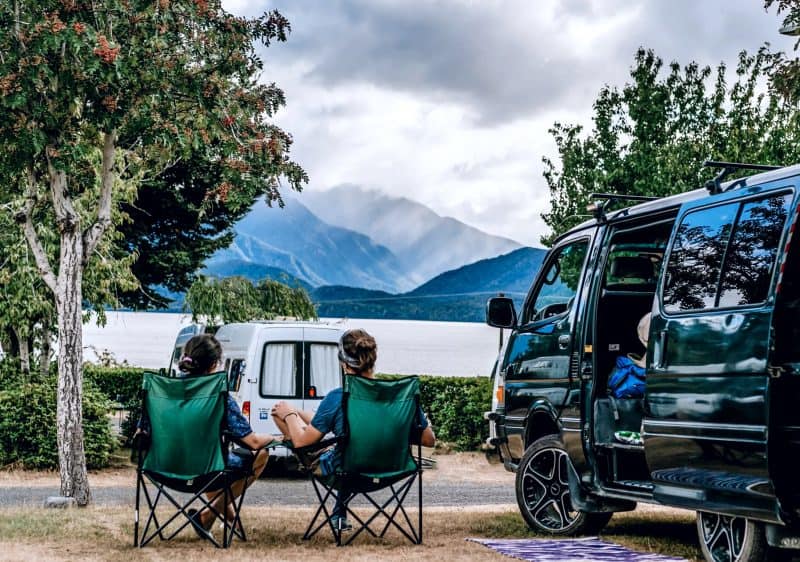
The thing that keeps drawing us back to holiday parks is not the price or the facilities — it is the strange, accidental community that forms every time you stay in one. You are living alongside people you did not choose, sharing spaces you did not design, and somehow it works. We have shared a kitchen bench with a German couple cycling the length of New Zealand, a family from Hokitika on their annual Kaikoura trip, and a solo traveller from Japan who was walking the Te Araroa trail and needed to recharge everything she owned.
There is a Chinese concept — renao — that roughly translates as the warm noise of a lively gathering. It is the atmosphere of a night market, a family banquet, a festival street. Holiday parks, at their best, have renao. The hum of conversations from different sites, the sizzle of barbecues, kids chasing each other around the playground while the sun goes down — it is a particular kind of alive that you do not get from the quiet corridor of a hotel.
This social dimension is something we did not expect to value as much as we do. Coming from a culture where communal living is familiar — where apartment complexes share courtyards and grandparents know every neighbour — the holiday park felt oddly comfortable once we stopped treating it as a budget compromise and started seeing it as a way of travelling. You stay closer to the ground, closer to the people around you, and closer to the place you came to see.
Kids Families and the Freedom of Outdoor Stays
If you are travelling with children, holiday parks stop being one option among many and start being the obvious choice. The reason is simple: kids have space to be kids. In a hotel, children are confined to a room and expected to behave like small adults. In a holiday park, they have a playground, a field, a swimming pool, and — crucially — other children. Within an hour of arriving at any park, our kids have made friends with children they have never met and disappeared into some improvised game that involves bikes, a ball, and rules that change every five minutes.
The practical advantages compound quickly. You can cook meals your children will actually eat instead of negotiating restaurant menus. You can do laundry mid-trip instead of packing fourteen outfits. Bedtime is flexible because your cabin is thirty seconds from the playground, not an elevator ride from a hotel lobby. And the cost of accommodating a large family in a single cabin is a fraction of what multiple hotel rooms would run you.
We have noticed that holiday parks bring out a particular kind of parenting — relaxed, trusting, slightly feral. Parents sit in camp chairs outside their cabins while kids roam the grounds in packs. There is an implicit understanding that the campground is a shared village and everyone keeps half an eye on everyone else. For us, coming from a parenting culture that tends toward the protective, this was a revelation. Our kids learned to climb trees, build fires under supervision, and negotiate social hierarchies entirely in English — all within the boundaries of a holiday park in the Coromandel.
Holiday parks are not glamorous and they are not trying to be. They are practical, social, and quietly brilliant at putting you exactly where you want to be — beside the beach, at the edge of the bush, within walking distance of the track you woke up early to hike. For anyone exploring New Zealand on any budget, they deserve a place on the itinerary that goes beyond “we could not find a hotel.” Stay in one. Cook dinner in the shared kitchen. Wake up to tui song and the sound of someone else making coffee. You will understand why New Zealand never outgrew them.
5 Comments
The renao section is my favourite part of this article. That is exactly the feeling and I have never had a word for it before. We have been going to the same Top 10 in Kaikoura every January for about eight years now and it is that hum of the campground at dusk that keeps us coming back. The kitchen conversations with strangers are honestly some of the best parts of any trip. Last year a family from Taiwan taught my daughter to fold dumplings and we taught their kids to make pikelets. Felt like a fair trade.
The door wedge tip is gold. Wish I had read this before our last trip to Coromandel — that cabin door nearly gave me a heart attack at 2am.
This article really captures how weird holiday parks seem when you first arrive from China. My husband and I booked our first cabin in Taupo because the hotels were all full over Chinese New Year and I honestly thought we had made a terrible mistake when I saw the shared kitchen. Three days later I did not want to leave. The kids had found a group of local children and they were all playing on the jumping pillow together — nobody needed translating, they just figured it out. We go every year now.
Li Na that is such a lovely story. The jumping pillow thing is so true — kids just sort themselves out. My whanau has been doing holiday parks since I was little and we still go to the same one in Whangamata every summer. It is basically a family reunion that happens to include 200 strangers haha. Glad you found that community feeling too.
Reckon you could do a whole separate article on DOC campgrounds. Lake Mavora is amazing but do you need to book those basic ones in advance or is it first come first served? We are planning a Southland trip in March and trying to work out whether to wing it or lock everything in beforehand.