
Willowbank Wildlife Reserve – Christchurch Kiwi Encounters and Native Bush
Willowbank in Christchurch pairs kiwi breeding encounters and native bush with the Ko Tane Maori experience. A Canterbury day worth planning for.
The first time we saw a kiwi at Willowbank, nobody in our group spoke for about thirty seconds afterwards. It was smaller than we expected, faster than it looked, and the dark room smelled like damp bush and something ancient. Willowbank Wildlife Reserve has been running on the northern edge of Christchurch since 1974, and in that time it has become one of the few places in Canterbury where you can see native birds, walk through a working breeding programme, and sit down to a hangi — all without leaving the same patch of land.
How a Canterbury Farm Became a Wildlife Reserve
Fifty Years of Quiet Stubbornness
We first visited Willowbank Wildlife Reserve on a grey Saturday in 2016, mostly because a friend with kids said it was good and we had run out of post-earthquake Christchurch things to do. That was ten years ago. We have been back five times since, which tells you something about a place that could easily be dismissed as a small suburban animal park.
The reserve opened in 1974 on farmland at the northern edge of the city, near the airport, and it has been running continuously ever since. That is fifty years of operation without a rebrand, a corporate takeover, or a pivot to Instagram-friendly experiences. It is still family-run. The paths are a bit uneven. The signage looks like it was designed in the 1990s. None of this matters once you realise the place has been quietly accumulating knowledge, breeding programmes, and native species for half a century while flashier operations came and went.
For us — and for plenty of other Chinese New Zealanders who grew up in cities where the closest wildlife encounter was a sparrow on a windowsill — Willowbank was the place where New Zealand stopped being a postcard and started being an ecosystem.
The Scale of the Place
The numbers sound modest by international standards: over 100 species and more than 500 individual animals and birds spread across a site you can walk in a couple of hours. If you are comparing this to a major Chinese zoo — say, Beijing Zoo with its 14,500 animals — the scale is not the point. The point is how close you get.
Willowbank is not a zoo in the concrete-and-glass sense. The enclosures are naturalistic, set among native bush and open grassland. Weka wander the paths. Kaka call from overhead. You walk through the habitats rather than past them, and the distinction matters more than you might expect. There are no crowds pressing against barriers, no PA system blaring show times. The pace is set by the animals, and by how long you choose to stand still.
A comfortable visit takes two to three hours. Families with young children tend to stay longer because the farmyard section (more on that shortly) is hard to leave. If you are planning to combine a daytime visit with the Ko Tane evening experience, budget for a full day.
Getting There and Timing Your Visit
Willowbank sits on Hussey Road, about twenty minutes north of central Christchurch by car. The drive out passes through the flat suburban grid of Harewood and then, rather suddenly, into open paddocks. There is parking on site and it is free — a detail worth noting because parking in Christchurch proper has become an ordeal.
Summer hours run from 9:30am to 7pm, which is unusually late for a wildlife park. The extended hours are deliberate: the kiwi house gets better as the light fades, and the evening window lets you experience the nocturnal house in something closer to actual darkness. Winter hours close at 5pm, which still gives you a solid day if you arrive before lunch.
There is a restaurant on site — decent enough for lunch, nothing extraordinary — and a gift shop stocked with the kind of NZ-themed merchandise that makes good presents for family back in China. Soft toy kiwi birds, pounamu-style pendants, manuka honey. The usual suspects, but better curated than most.
Three Zones, Three Versions of New Zealand
Natural New Zealand — The Section That Matters Most
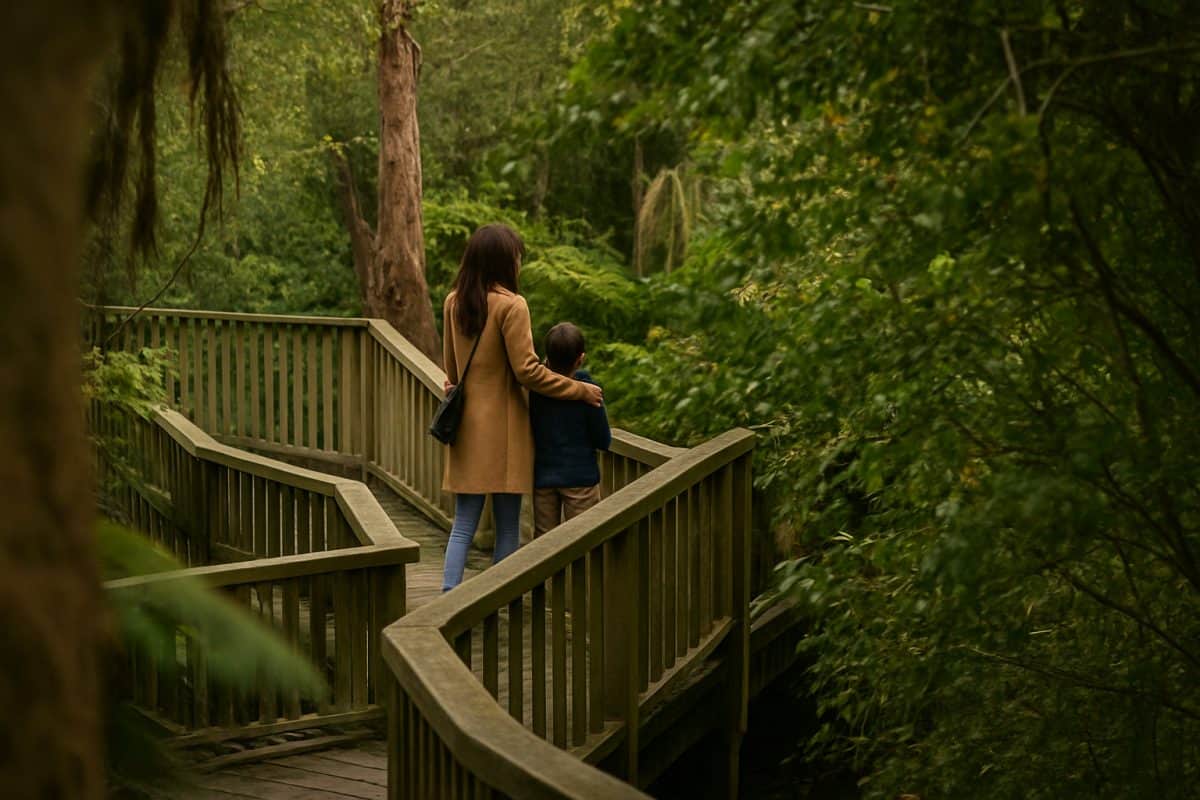
The Natural New Zealand zone is where the reserve stops being a pleasant outing and starts being something you remember. The path loops through regenerating Canterbury bush — kanuka, kowhai, cabbage trees — and the enclosures here hold species that most visitors, Chinese or otherwise, have only ever seen in documentaries.
Tuatara sit in their glassed enclosure with the absolute stillness of animals that have been doing this for 250 million years. They are not lizards, despite looking exactly like lizards. They are the sole surviving members of an entire reptilian order — the Rhynchocephalia — that otherwise died out with the dinosaurs. In Chinese, they are sometimes called da pan xi, but no translation quite captures the strangeness of standing a metre from a living fossil in suburban Christchurch.
The kaka aviary is loud and theatrical by comparison. These large bush parrots are curious, noisy, and visibly intelligent. The weka roam freely along the paths, and if you have food they will find you. The entire zone feels less like an exhibit and more like a walk through the bush that New Zealand used to be — before possums, stoats, and human settlement reshaped the ecology.
Heritage Country and the Farmyard
The Heritage section is, on paper, the least exotic part of Willowbank. Sheep, cattle, pigs, chickens — the working animals of the Canterbury Plains. But if you grew up in Guangzhou or Shanghai, a merino sheep is every bit as novel as a tuatara.
We watched a family from Chengdu spend forty minutes in the farmyard one afternoon. The children had never touched a sheep before. The parents were filming everything. There was a rooster that kept following them and a lamb that fell asleep in a girl’s lap. It was, objectively, just a farmyard. But for that family, it was their first encounter with the agricultural New Zealand that produces all that milk powder and wool they grew up seeing on supermarket shelves back home.
The zone also offers some context for Canterbury’s farming heritage — this flat, fertile land has been pastoral country since the 1850s, and the animals here represent breeds that shaped the region’s economy. There are heritage breeds alongside modern ones, and the information boards do a reasonable job of connecting the animals to the wider story of how Canterbury became what it is.
The International Animals You Did Not Expect
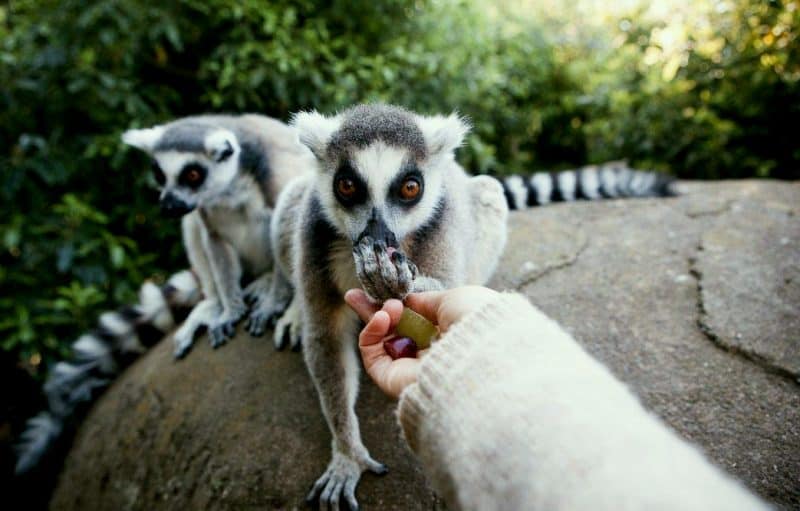
The third zone is officially called “New Zealand Wildlife,” which is confusing because it houses animals that are emphatically not from New Zealand. Wallabies, deer, otters, and a troop of capuchin monkeys live here, along with various other introduced species. The naming is a historical quirk — these were the original attractions when the reserve opened in the 1970s, and the native wildlife section came later as conservation priorities shifted.
The otters are the undeniable stars. They move through their pool with a fluidity that holds children and adults equally still, and feeding time draws a crowd every session. The capuchins are quick, loud, and endlessly watchable.
Is this the most “New Zealand” part of the reserve? No. But it rounds out the visit in a way that matters if you are travelling with children or with family members who need variety in a day out. And honestly, after the quiet reverence of the tuatara enclosure and the emotional weight of the kiwi house, a few minutes watching otters chase each other through water is a welcome change of register.
The Kiwi House After Dark
Why Willowbank Kiwi Encounters Are Different
Most kiwi houses in New Zealand offer a version of the same experience: you walk into a dark room, wait for your eyes to adjust, and hope to catch a glimpse of a brown shape shuffling through leaf litter behind glass. It is better than nothing, but it often feels like visiting a relative in hospital — you saw them, technically, but you would not call it quality time.
Willowbank does something different. The reserve runs an active kiwi breeding programme with an on-site hatching laboratory, and this changes the encounter from observation into something that feels closer to participation. The birds here are not just display animals; they are part of a programme that has hatched and raised kiwi for release into predator-controlled areas across the South Island. When you watch a kiwi probe the soil with its long bill, you are watching an animal whose offspring may already be living wild in the hills above Kaikoura or Arthur’s Pass.
That context — knowing the breeding work happens in the building next door — gives the kiwi house a seriousness that the dim lighting alone cannot provide. This is conservation work you can witness, not a tourist attraction pretending to be one.
What You Actually See in the Nocturnal House
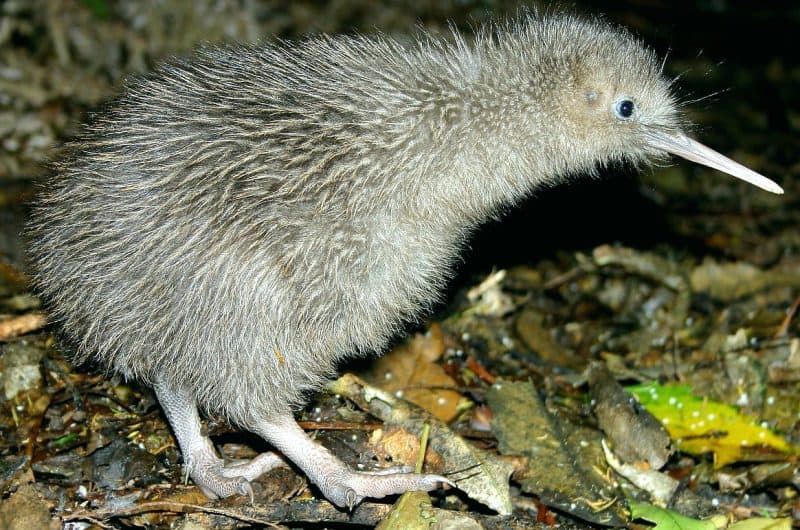
The nocturnal house is kept at a low red light that simulates dusk. Your eyes take a minute to adjust, and then the kiwi appear — rounder, smaller, and faster than most people expect. They move through the undergrowth with surprising purpose, jabbing their bills into the soil with the precision of someone who knows exactly where dinner is buried.
If the timing is right, you may see chicks in the hatching facility. Kiwi chicks are absurdly small relative to the size of the egg they came from, and watching one stumble around an incubation box is the kind of thing that stays with you longer than it has any right to. The reserve runs kiwi hatching tours during breeding season, though availability varies and booking ahead is wise.
For Chinese visitors especially, this is often the moment the kiwi stops being a national symbol on a souvenir and becomes an actual animal. Jiwei niao — the kiwi bird — is a creature most Chinese people have heard of but remarkably few have seen in person. There is something about the dark room, the rustling, and then the sudden appearance of this odd, flightless bird that closes the gap between knowing a fact and understanding why New Zealanders chose it as their national icon.
Ko Tane and the Evening That Changes the Visit
A Maori Cultural Experience Without the Tourist Veneer
Ko Tane is a Maori cultural experience that runs within the Willowbank grounds in the evening, and it is worth treating as a separate event rather than an add-on to your daytime visit. The experience includes a traditional powhiri (welcome ceremony), a hangi meal cooked in an earth oven, and cultural performances — waiata, haka, and storytelling — delivered in a bush setting that feels closer to a marae than a stage.
What sets Ko Tane apart from the larger Rotorua operations is scale. The groups are smaller. The performers interact with you directly. The bush around the reserve goes dark while the hangi steam rises, and the whole thing feels less like a cultural show and more like being invited somewhere. For Chinese visitors, this is often a first direct encounter with Maori culture and tikanga, and the intimacy of the setting makes it land differently than a theatre performance in a convention centre would.
We have taken visiting family to Ko Tane twice, and both times it produced conversations that lasted the entire drive back to the city. Something about the evening format — the dark, the fire, the directness of the welcome — cuts through the usual tourist distance.
Booking and What to Bring
Ko Tane runs on selected evenings and must be booked in advance — it is not something you can walk into on the night. Check the Christchurch & Canterbury Tourism listings or contact the reserve directly for current schedules and pricing. During peak summer season, sessions fill quickly.
The natural pairing is a daytime visit to the wildlife reserve followed by Ko Tane in the evening. You can leave and return, or spend the gap at the on-site restaurant. Either way, the combination turns a half-day attraction into a full day that covers native wildlife, conservation, and Maori culture in a single location — which is a genuinely unusual offering for Canterbury.
A practical note: Canterbury evenings get cold. Even in January, the temperature drops sharply after sunset, and Ko Tane happens outdoors in the bush. Bring a jacket, wear closed shoes, and dress warmer than you think you need. Anyone who has experienced a Canterbury nor’wester dying at dusk knows what we mean — the day can be 30 degrees and the evening 14.
Guided tours with interpreters are available for groups who prefer Mandarin or Cantonese commentary, though these need to be arranged in advance. For families visiting from China, this can make the difference between observing the cultural experience and actually understanding it.
There are bigger wildlife parks in New Zealand, and there are more famous ones. But Willowbank has something that is harder to manufacture than scale or reputation: the feeling that the people who run it care about every animal on the property. After fifty years on the same piece of Canterbury farmland, the reserve has become part of the ecosystem it set out to display — and for visitors who grew up on the other side of the Pacific, it remains one of the most honest introductions to this country’s natural heritage.
4 Comments
Ko Tane is genuinely something else. We did the evening experience last winter and the combination of the dark bush and the hangi steam was pretty special. The bit about Canterbury evenings getting cold is spot on — my wife was in a t-shirt and absolutely froze. Bring a proper jacket, not just a hoodie. The performers were really generous with their time afterwards too, we ended up chatting for ages about the haka traditions.
Dave — how far in advance did you book Ko Tane? We are thinking of going over the Christmas break but the website seems to only show dates a few weeks out. Also does anyone know if the Mandarin guided tours mentioned in the article are still running? Tried calling the reserve but could not get through.
The tuatara section really resonated with me. I remember trying to explain to my mum on WeChat what a tuatara was and she kept saying “so it is a lizard” and I kept saying no, it is NOT a lizard haha. 250 million years is hard to wrap your head around when you are standing right there. Also agree about the farmyard — my nephew who grew up in Shenzhen lost his mind over the sheep. He had genuinely never touched one before.
Really appreciate how you described Ko Tane as feeling closer to a marae than a stage. That is exactly what they are going for and it is nice to see it recognised.