
Fullers Ferries Auckland – Harbour Cruises and Island Connections
Guide to Fullers ferries in Auckland covering Waiheke and Rangitoto island trips, Devonport crossings, harbour cruises, tickets, and seasonal tips.
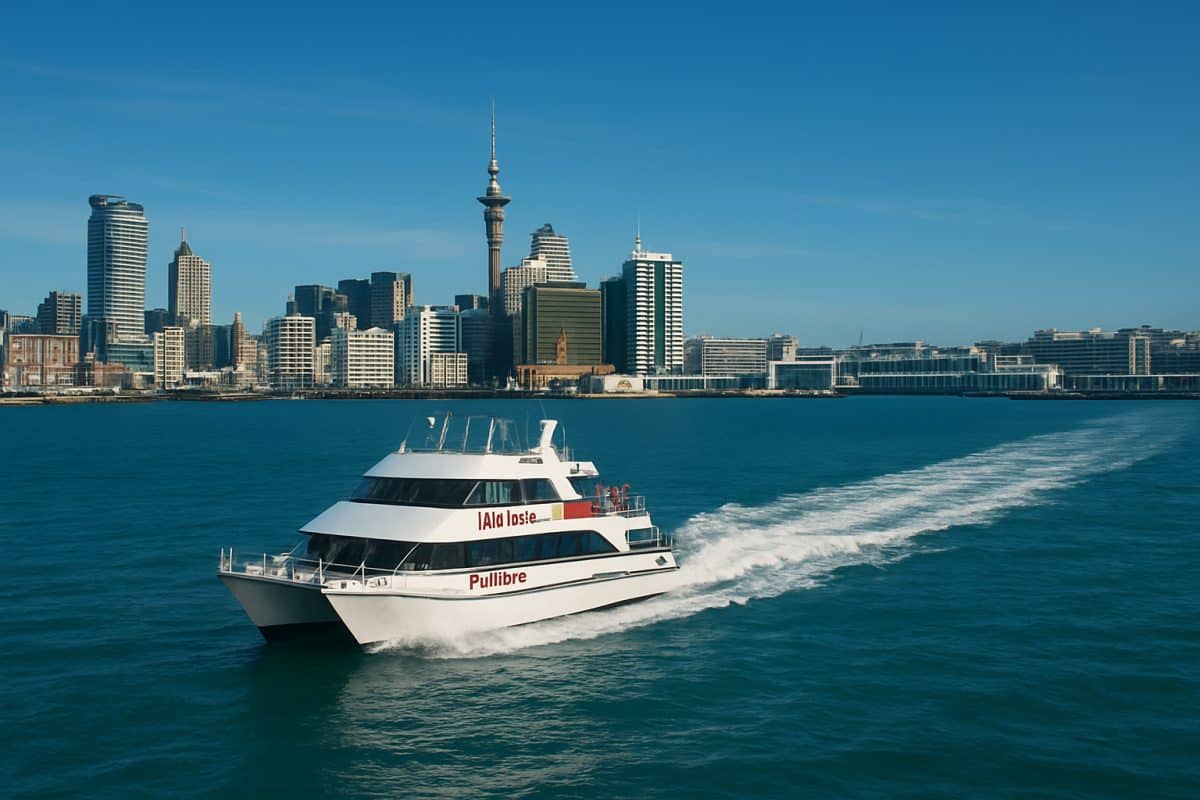
Auckland is a city built around water, and the best way to understand that is to get on a boat. Fullers ferries have been running routes across the Waitemata Harbour and out into the Hauraki Gulf for over a century, connecting the downtown terminal to islands, beaches, and North Shore suburbs that feel like separate towns. For us, the ferry network was one of the first things that made Auckland click — the moment you step off the wharf onto a boat and watch the skyline recede, the city stops being confusing and starts being beautiful.
This guide covers the main Fullers routes, from the quick commuter hops to Devonport and Birkenhead through to the island day trips that every Auckland visitor should make at least once. We have ridden all of them, in every season, and we will tell you what is genuinely worth your time.
Getting Your Bearings at the Downtown Ferry Terminal
Where to Find the Terminals and How the Piers Work
Auckland’s downtown ferry terminal sits at the bottom of Queen Street, right where the city’s main commercial artery meets the Waitemata Harbour. You will see the terminal building before you see the water — a low-slung structure with glass frontage and a row of electronic departure boards that look like they belong in a small regional airport. The terminal underwent a major rebuild as part of the wider downtown programme, and the result is cleaner and more legible than the old setup, though on a busy Saturday morning it still fills up fast.
The piers fan out from the main building. Pier 1 handles the Devonport and Stanley Bay services. Pier 2 is where most of the Waiheke and Rangitoto ferries depart. Pier 3 and Pier 4 serve the Birkenhead, Northcote Point, and Half Moon Bay routes, along with seasonal cruise departures. Signage is decent — follow the overhead screens rather than trying to memorise pier numbers, because they do shift services around during maintenance periods.
If you are arriving by train, Britomart station is a three-minute walk. By bus, the terminal is on most central routes. Parking nearby is expensive and scarce, which is actually the point — the ferry system works best when you treat it as the start of a car-free day rather than a park-and-ride situation.
Buying Tickets and the AT HOP Card Question
Fullers runs a dual system for tickets. On commuter routes — Devonport, Birkenhead, Northcote Point, Half Moon Bay, and the Hobsonville service — you can use an AT HOP card, the same contactless card that works on Auckland buses and trains. You tag on at the pier and tag off at your destination. Fares are lower with HOP than cash, and monthly caps apply, which matters if you are commuting daily.
For the island services and harbour cruises, AT HOP does not apply. Waiheke, Rangitoto, and the sightseeing sailings use Fullers’ own ticketing. You can book online through the Fullers website or buy at the counter. Online booking is worth it for Rangitoto in summer — the boats have a fixed capacity and popular morning departures sell out, especially on weekends and public holidays. For Waiheke, the service runs frequently enough that pre-booking is less critical unless you want a specific sailing.
One thing that catches first-timers: the ticket counter and the online check-in kiosk are in different spots inside the terminal. If you booked online, look for the self-service machines near the entrance rather than joining the counter queue. It saves ten minutes on a busy morning.
Sailing Frequency and What Happens When the Weather Turns
On the commuter routes, ferries run roughly every 20 to 30 minutes during peak hours and every 30 to 60 minutes off-peak. Devonport is the most frequent — you can almost always just show up and catch the next one. Waiheke services depart approximately every hour, sometimes more often in summer. Rangitoto is more limited, typically two or three departures per day with fixed return times, so checking the schedule matters.
Then there is the weather. The Hauraki Gulf is mostly sheltered, but a solid northeasterly or a winter storm can turn the water rough enough to delay or cancel services. Fullers posts live updates on their app and website, and Auckland Transport tweets cancellations, but the honest answer is that experienced commuters check the wind forecast before heading to the pier. If the forecast says 25 knots or above, plan a backup.
Cancellations are more common on the outer routes — Rangitoto and Waiheke — than on the short harbour crossings. The Devonport ferry runs in almost anything short of a genuine gale. When services are cancelled, Fullers typically offers rebooking or refunds, though the process can be slow if the whole timetable is disrupted. The practical move is to keep your plans flexible on days when the weather looks marginal. Auckland’s harbour is spectacular partly because it is exposed to real weather, and that cuts both ways.
The Commuter Routes That Double as Sightseeing
Devonport: Twelve Minutes to a Different Century
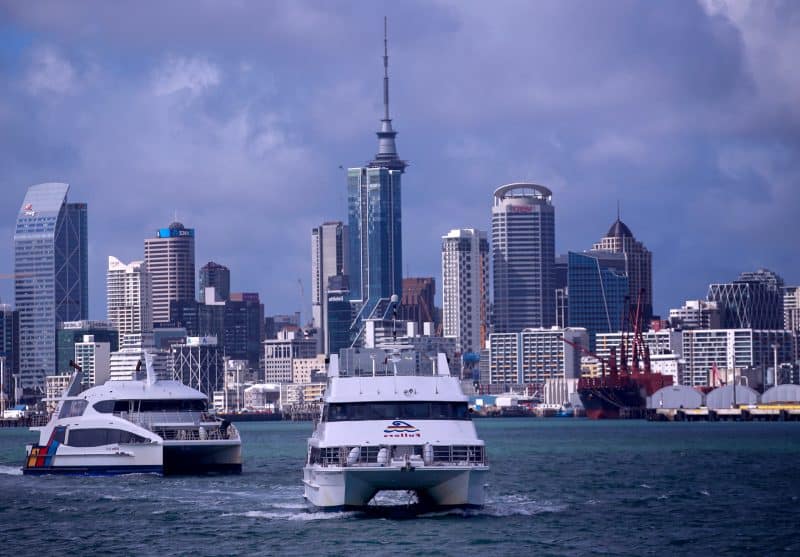
The Devonport ferry is the one we tell every newcomer to ride first. Twelve minutes, downtown to village, and the whole character of your day changes. You leave the glass towers behind, cross a stretch of water that catches the light differently depending on the hour, and step off into a place that feels like a New Zealand coastal town from forty years ago — weatherboard villas, old pohutukawa trees leaning over footpaths, a main street with bookshops and cafes instead of chain stores.
From the top deck, the Auckland skyline pulls away behind you and the North Shore rises ahead. On clear days, Rangitoto’s volcanic cone sits to the east like a set piece. We have made this crossing dozens of times and still find ourselves watching. Coming from a country where cities face inland, the novelty of a metropolis that turns its face to the ocean has never quite worn off. The Chinese word for harbour is gangkou (gang kou) — literally “port mouth” — and Auckland’s harbour really does feel like a mouth, opening outward.
Devonport itself rewards a slow morning. Walk up Mount Victoria for the panorama, browse the galleries along Victoria Road, eat fish and chips at the waterfront. The return ferry runs late, so there is no pressure. This is also the cheapest crossing on the network — a few dollars with an AT HOP card — which makes it possibly the best-value scenic experience in Auckland.
Birkenhead and Northcote Point on the Upper Harbour
The Birkenhead ferry departs from Pier 3 and crosses to a small wharf tucked beneath the Harbour Bridge. It is a commuter service, full of people reading phones and drinking takeaway coffee, and that is exactly why we like it. There is no commentary, no tourist pricing, just a working boat on a working harbour.
The crossing takes about fifteen minutes and passes directly under the bridge. Looking up at the underside of the Auckland Harbour Bridge from water level is a perspective most visitors never get. The steel lattice overhead, the traffic rumble, and then open water on the other side — it is a brief, satisfying moment.
Northcote Point, one stop further, is a residential headland with old villas and quiet streets that slope down to the water. Neither Birkenhead nor Northcote Point are tourist destinations in any conventional sense, and that is the recommendation. If you want to experience Auckland’s ferry network the way locals use it — as practical, pleasant, everyday transport — these are the routes to ride.
Half Moon Bay and the Eastern Beaches
The Half Moon Bay ferry runs from the eastern suburbs to the downtown terminal, crossing the Tamaki Strait rather than the main harbour. The route is less well known than the North Shore services and carries a different crowd — families from Howick, students heading to the university, tradespeople with tool bags heading into the city.
The sailing takes around 35 minutes and follows the coastline past Musick Point, a headland that was once a maritime radio station and is now a reserve with walking tracks and views across to Rangitoto. The ferry rounds the point and enters the main harbour for the approach to downtown. On a still morning, with the Coromandel Peninsula visible as a blue ridge on the eastern horizon, this is one of the loveliest commuter rides in the country.
Half Moon Bay itself has a marina, a few cafes, and a boat ramp that gets chaotic on summer weekends. It is not a destination you would travel across the city for, but as a starting point for a ferry ride it works well. If you live in east Auckland, this route turns a frustrating motorway commute into something you actually look forward to.
Island Day Trips on the Hauraki Gulf
Waiheke Island: Wine, Beaches, and the 40-Minute Escape
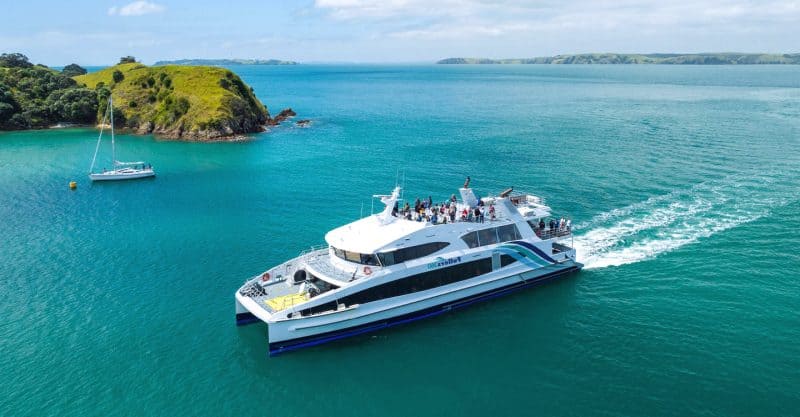
The Waiheke ferry is the route that sells Auckland to people who thought they already understood it. Forty minutes from downtown, the boat pushes out through the inner harbour, past the container port and the navy base, and into the Hauraki Gulf proper. The water changes colour as you go — grey-green near the wharves, then a deeper blue once you clear the shelter of Rangitoto. On a good day, and Auckland has more good days than its reputation suggests, the light on the gulf is extraordinary. Bright and clean, the kind of light that makes you understand why painters moved here.
Waiheke Island has vineyards, olive groves, sculpture trails, and beaches that would be famous if they were anywhere more accessible. Onetangi Beach is the long one — golden sand, safe swimming, almost absurdly picturesque. The vineyards around the centre of the island produce some of New Zealand’s best syrah and bordeaux-style reds. A day trip can comfortably include a beach, a winery lunch, and a wander through the art galleries at Oneroa before catching the late ferry back.
Getting around on Waiheke requires a bit of planning. There is a local bus service that connects the ferry terminal at Matiatia to the main villages, or you can rent a car, scooter, or e-bike at the wharf. Walking is fine within Oneroa village but the island is hilly and spread out. We usually rent bikes and accept the hills as payment for the wine at lunch.
Rangitoto: Walking a Volcano Before Lunch
Rangitoto is the youngest volcano in the Auckland volcanic field — about 600 years old, which in geological terms means it arrived yesterday. From the city it looks like a flattened dome on the horizon, so symmetrical it barely seems real. Up close, it is a raw landscape of black lava rock, lichen, and pohutukawa trees that have somehow rooted into the basalt.
The ferry drops you at Rangitoto Wharf on the southern shore, and from there a well-formed track leads to the summit. The walk takes about an hour each way — not difficult, but steady uphill on an exposed path with no shade for long stretches. The summit lookout gives you a 360-degree view of the Hauraki Gulf, the Auckland skyline, and on clear days the Coromandel ranges to the east. It is one of those views that makes you go quiet for a minute.
The critical thing about Rangitoto is that there is nothing on the island. No shops, no cafe, no tap water. The Department of Conservation manages the island as a nature reserve and they mean it. Bring water — at least a litre per person — sunscreen, lunch, and a layer for the summit wind. The return ferry time is fixed, printed on your ticket, and non-negotiable. Miss it and you are spending an uncomfortable night on volcanic rock. We have never missed one, but we have seen people sprinting down the track, and it is not a dignified look.
Motutapu and the Quieter Gulf Islands
Motutapu sits right next to Rangitoto, connected by a causeway you can walk across. Where Rangitoto is volcanic and barren, Motutapu is green and rolling — pastoral farmland that has been gradually restored as a conservation project. The DOC restoration programme has replanted native bush and reintroduced species including takahe, one of the rarest birds on Earth.
The Rangitoto-Motutapu walkway connects the two islands and takes about five to six hours return if you do the full loop. It is a proper day walk — pack accordingly. Most visitors who take the Fullers ferry to Rangitoto stick to the summit track and never cross to Motutapu, which means if you do make the crossing you will likely have the trails to yourself.
Further out in the gulf, Tiritiri Matangi and Great Barrier Island are served by other operators, but Fullers’ own network concentrates on the inner gulf. The company occasionally runs special sailings to Tiritiri Matangi for birdwatching trips, but these are seasonal and need to be booked well in advance. For the casual visitor, Rangitoto and Waiheke are the two essential island trips, and both are comfortably achievable as day outings from the city.
Harbour Cruises and Scenic Sailings
The 1.5-Hour Harbour Cruise and What You Actually See
Fullers’ dedicated harbour cruise runs for about 90 minutes and loops through the inner Waitemata, passing Devonport, the Harbour Bridge, Bean Rock lighthouse, and the Viaduct Basin before returning to the terminal. There is recorded commentary — informative enough, if a little relentless — and a licensed bar on board. The upper deck is open air. The lower deck has windows and seating that feels like a small passenger plane from the 1990s.
Is it worth it? That depends on what you want. If you have limited time and want a single-ticket overview of the harbour, the cruise packs a lot of visual information into 90 minutes. You see the bridge from below, the volcanic cones from the water, and the eastern bays stretching out towards the Hauraki Gulf. The commentary fills in the history — the volcanic field, the Maori settlement patterns, the colonial port development — and for first-time visitors that context adds genuine value.
If you have a full day, though, we would honestly suggest skipping the cruise and riding the commuter ferries instead. A return trip to Devonport plus a return trip to Birkenhead covers most of the same water for a fraction of the price, and you get to walk around actual places at each end rather than just looking at them from a boat. The harbour cruise is a good option for people with mobility constraints or tight schedules, and the commentary is well-researched. But the commuter ferries are the real thing, and the harbour looks the same from both.
Sunset and Evening Sailings
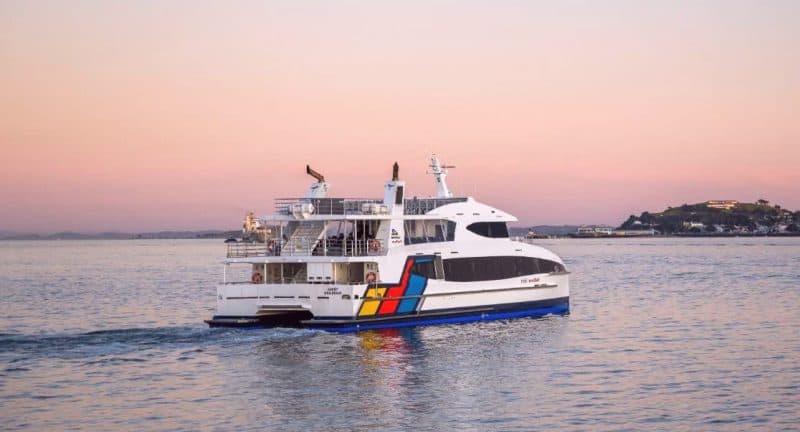
Through summer, Fullers runs evening sailings that catch the harbour at its most atmospheric. The late-afternoon light turns the downtown towers gold and the water goes flat and glassy, and if the timing is right you get a sunset behind the Waitakere Ranges that looks like someone painted it on. We are not usually sentimental about this sort of thing, but the Auckland waterfront at dusk genuinely earns it.
The dinner cruise options vary by season. Some years Fullers runs a dedicated dining service with a set menu; other years the evening sailings are simpler affairs with a bar and snacks. Check the current offerings on the website rather than relying on last year’s information. The evening market at the Viaduct Basin is worth visiting before or after a sunset sailing — it has street food, live music on weekends, and a view across the marina that pairs well with a cold beer.
A cheaper alternative: catch the regular Devonport ferry at around 7pm on a summer evening, walk to the waterfront in Devonport, watch the sunset from the beach, and ferry back. Same harbour, same light, regular fare. The Chinese concept of xiyang (xi yang — setting sun) carries a note of melancholy, but an Auckland harbour sunset has nothing melancholy about it. It is warm and generous and absurdly pretty, and you can ride it for the price of a bus ticket.
Making the Most of the Ferry System
What to Bring and What to Leave Behind
The harbour wind is the thing most people underestimate. Even on a warm day in the city, the open water drops the temperature by several degrees, and a stiff breeze across the deck makes it feel colder again. A windproof jacket takes up no room in a bag and saves every ferry trip from being an endurance test. Sunglasses are equally non-negotiable — the glare off the water on a clear day is punishing.
Bikes are welcome on most Fullers services, though there are limits on numbers per sailing and some peak-hour restrictions on commuter routes. If you are planning to cycle on Waiheke or around Devonport, check the bike policy before you go. Folding bikes are generally fine anytime. Full-sized bikes may need to wait for the next ferry if the rack is full.
For Rangitoto specifically, we cannot say this firmly enough: bring food, water, and sun protection. There is no shelter on the summit track and nowhere to buy anything on the island. A hat, sunscreen, a full water bottle, and a packed lunch are not optional. Sturdy shoes help too — the lava rock is uneven and ankle-turners are common. For Waiheke, the requirements are lighter since the island has shops and restaurants, but bringing snacks for the ferry ride is still a good idea. The onboard cafe sells coffee and basic food, but the prices reflect the captive audience.
The View from the Deck in Every Season
We have ridden these ferries in every month and the harbour never looks the same twice. In summer, the gulf is scattered with white sails and the beaches on Rangitoto’s shore are dotted with kayakers. The ferries are full — families with beach gear, backpackers with daypacks, couples heading to Waiheke vineyards. The energy is holiday-loose and cheerful. Grab an outside seat early or you will be standing.
In winter, the ferries are half-empty and the harbour is yours. The water turns steel-grey and the sky sits low, and there is a particular beauty to seeing the Auckland skyline through rain — the buildings soften and the harbour lights reflect long and wavering on the surface. We grew up with the idea that water cities look best in poor weather. Shanghai in the rain, Hong Kong in fog. Auckland in winter fits that tradition. The cold air off the Waitemata is sharp and clean, and there is a satisfaction in rugging up on the top deck with a takeaway flat white while the boat pushes through chop that would have cancelled a lesser service.
The Auckland Transport ferry network is one of those things that locals take for granted and visitors discover with genuine delight. For us, as people who arrived in this country and had to learn it from scratch, the ferries were part of the education. You understand Auckland differently from the water. The city makes sense as a harbour city, and the ferry routes trace the shape of that harbour like a map drawn in real time. However many times we ride them, there is always something new to notice — a cormorant diving off Bean Rock, a container ship sliding in from the Pacific, the way Rangitoto changes colour in the late afternoon light. Meici dou bu yiyang (mei ci dou bu yi yang). Every time, it is different.
The Fullers ferry network is one of Auckland’s best features and one of its least marketed. There is no hard sell needed — you buy a ticket, you get on a boat, and the harbour does the rest. For day visitors, the Waiheke and Rangitoto trips are essential. For anyone staying longer, the commuter ferries offer a daily reminder that you live in a city where the ocean is never more than a few minutes away.
Wo men zai shui shang jian ni (wo men zai shui shang jian ni) — we will see you on the water.
3 Comments
I commuted on the Devonport ferry for three years and this captures it perfectly. The bit about the skyline pulling away behind you — yes. That never gets old even when you are doing it five days a week. One thing worth adding is that the 7:15am sailing in winter when the sun is just coming up over Rangitoto is genuinely one of the best views in Auckland. Free with your HOP card.
Good to see Half Moon Bay get a mention. I grew up in Howick and that ferry is honestly one of the best kept secrets in Auckland. But saying it “is not a destination you would travel across the city for” is a bit harsh haha. The marina area has really improved and there are some decent spots for fish and chips along the waterfront now. The ride past Musick Point on a still morning is as good as anything on the Devonport route imo.
Cannot stress the Rangitoto water thing enough. Saw a couple last summer with no water, no food, trying to do the summit in jandals. Bring a litre each minimum, more if it is hot.