
Auckland Explorer Bus – Hop-On Hop-Off Sightseeing Guide
Route, timing strategy, and honest value assessment for Auckland's Explorer Bus. Practical hop-on hop-off advice from locals who have ridden the loop.
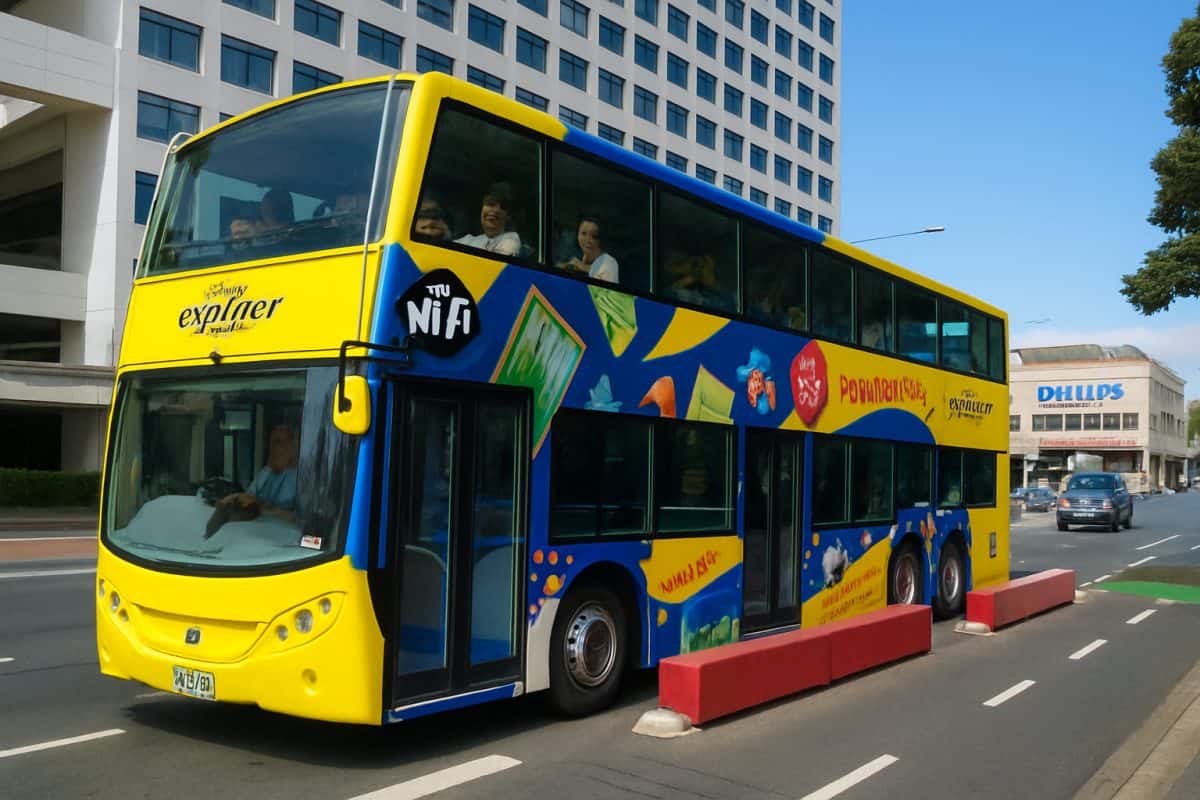
The Auckland Explorer Bus is one of those services that every first-time visitor notices and most long-term residents have never used. We finally bought a pass when family arrived from Shenzhen and we needed a plan that did not involve driving and narrating at the same time. What follows is everything we learned — the stops that justify the fare, the timing that makes or breaks the day, and an honest reckoning of whether the bus deserves your money or whether you are better off with an AT HOP card and a decent pair of shoes.
What the Explorer Bus Actually Is
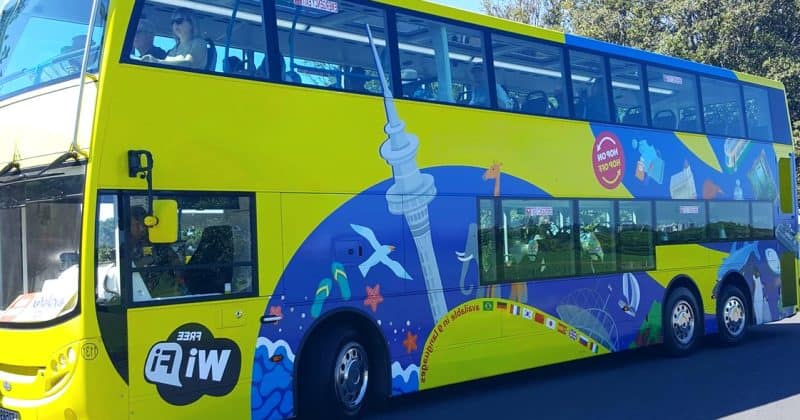
The Route and the Loop
The Auckland Explorer Bus runs a loop that starts and finishes at the Ferry Building on Quay Street, right where the harbour pushes up against the city. From there it traces a wide circuit east along the waterfront through Mission Bay, climbs into Parnell, passes the Auckland War Memorial Museum and the Domain, drops through Newmarket, then swings west to MOTAT and the Zoo at Western Springs before looping back through Ponsonby and the Viaduct to where you started. Fourteen stops, give or take — the exact number shifts with seasonal route adjustments, so check before you board.
The full loop takes roughly ninety minutes if you stay in your seat the entire way. Nobody does that, of course — the point is to get off. But riding the circuit once without stopping is genuinely useful as an orientation, especially if you have just landed and Auckland still feels like a sprawl of motorway and suburb. From the top deck you get a sense of how the city fits together: the harbour always to the north, the volcanic cones punctuating the skyline, the way each neighbourhood announces itself through the shopfronts and the tree canopy.
This is not a rebadged city bus. It is purpose-built for sightseeing, with open-top seating, recorded commentary, and a driver who waits while you fumble for your phone at the scenic lookouts.
How Hop-On Hop-Off Works in Practice
You buy a pass — usually one day, sometimes two — and the bus is yours. Hop on at any stop, ride as far as you like, hop off when something catches your eye, then wait for the next bus and do it again. Simple in theory. In practice, the frequency determines whether you enjoy yourself or spend the day staring at a bus stop sign.
During summer peak season, buses run every thirty minutes or so. In winter, or on quieter weekdays, that stretches to forty-five minutes. Miss one by thirty seconds and you are standing at a Mission Bay bus shelter for the better part of an hour, watching seagulls fight over chips. We have done this. It is not the highlight of anyone’s Auckland experience.
The onboard commentary runs in English by default — a mix of historical facts, neighbourhood colour, and the kind of gentle jokes that tour bus commentary trades in everywhere from Sydney to San Francisco. Some services offer multilingual audio through an app or headset, though availability varies by operator and season. Worth checking ahead if language matters to your group.
The Stops Worth Leaving Your Seat For
The Waterfront Run – Viaduct to Mission Bay
The first stretch east from the Ferry Building is the one the brochure photos come from, and for once the brochure is not lying. The bus runs along Tamaki Drive with the Waitemata Harbour on your left — Rangitoto Island sitting on the horizon like a postcard that somebody left out in the rain. The Viaduct Harbour stop is worth a look if you want to walk the marina and see where the Americas Cup boats used to live, but the real payoff is further east.
Mission Bay is where most people hop off, and they are right to. The beach is a gentle crescent of sand facing north, the water is calm enough for kids, and the ice cream shops along the esplanade are doing the kind of steady business that suggests everyone in Auckland has independently decided this is the place to be on a sunny afternoon. Get a scoop from one of the gelato places — we will not name a favourite because it changes every year — and sit on the seawall.
The eastern bays have long been home to a significant Chinese community in Auckland. Walking along the Mission Bay shops, you will hear Mandarin and Cantonese as often as English — zheli you zhongguo ren de shenghuo qixi (there is a Chinese rhythm to life here). It is a small thing, but if you are visiting from China or newly arrived, it is the kind of detail that makes a foreign city feel less foreign.
Parnell and the Museum Precinct
The bus climbs from the waterfront into Parnell, and the vibe shifts from seaside to village. Parnell Road is lined with heritage buildings repurposed as boutique shops, galleries, and the kind of cafes where the cabinet food is arranged like a still life. If you enjoy browsing — ceramics, jewellery, books — it is a pleasant hour. If you want big attractions, it is a coffee stop and nothing more. We say this with affection: Parnell is the neighbourhood Auckland brings out when it wants to seem quaint.
The Auckland War Memorial Museum, on the other hand, is the stop where you should plan real time. The building sits on the crest of the Auckland Domain with views north to the harbour and south across the city, and the collections inside are worth considerably more than the thirty minutes many bus passengers give them. The Maori galleries on the ground floor — the waka, the meeting house, the taonga — are some of the finest in the country. The Pacific collection upstairs is equally strong. Allow at least two hours, more if the volcanic eruption simulation in the basement is running.
Hopping off here and catching a later bus is the single best decision you can make on the Explorer route. The Domain parkland around the museum is beautiful for a walk, and if you have brought lunch, the grass under the pohutukawa trees is as good a picnic spot as Auckland offers.
The Western Springs Detour
West of the city centre, the bus route threads through suburban streets that are considerably less photogenic than the waterfront run. This is the stretch where the commentary works harder, because the view out the window is houses, hedges, and the occasional dairy. You are heading to Western Springs, where MOTAT and the Auckland Zoo sit side by side in a pocket of parkland around a small lake.
MOTAT — the Museum of Transport and Technology — is the kind of place that either delights you or does not. It is sprawling, slightly eccentric, and full of old trams, printing presses, and aviation exhibits that range from impressive to charmingly dusty. Kids tend to love it. Adults who remember visiting as schoolchildren in the 1990s tend to feel a complicated nostalgia. If vintage machinery and hands-on exhibits are your thing, hop off. If they are not, stay on the bus and enjoy the air conditioning.
The Auckland Zoo is a more conventional attraction and a reasonable way to spend an afternoon, particularly with children. The kiwi house is obligatory if you have not yet seen New Zealand’s national bird in person — they are smaller, angrier, and more endearing than photographs suggest. Western Springs park itself is worth ten minutes if you hop off: the lake, the eels, the black swans gliding around looking imperious. It is not a destination, but it is a genuine pause.
Timing, Tickets, and the Maths

How to Time the Circuit
Start early. The first Explorer Bus of the day usually departs around nine or ten in the morning, and the passengers who board at that hour tend to be the ones who get the most out of their pass. Our usual advice: ride the full loop first without hopping off. Ninety minutes of orientation, a coffee from the onboard thermos if the operator is a good one, and by the time you are back at the Ferry Building you have a mental map of the city and a shortlist of where to spend your time.
On the second circuit, hop off strategically. Morning light is best at Mission Bay — the harbour glitters, Rangitoto looks sharp against the sky. The museum opens at ten and is least crowded before noon. By early afternoon, the bus fills with cruise ship passengers who have docked at Queens Wharf and are doing Auckland in six hours. The top deck gets competitive.
Summer services run longer — the last bus might not return to base until five or six in the evening. Winter cuts that back to three or four. Schedules shift between operators and seasons, so checking the current timetable on the day is not optional advice, it is essential. The website will say one thing and the driver will know the truth. Ask the driver.
What You Pay and What You Get
The Explorer Bus is not cheap. A one-day adult pass typically runs between forty-five and fifty-five dollars, with children’s fares roughly half that and family passes offering a modest discount. By New Zealand tourism standards this is mid-range. By Auckland public transport standards it is eye-watering.
Here is the maths, since we are the kind of people who do this. A regular Auckland bus fare using an AT HOP card is a few dollars per trip. You could ride from the city to Mission Bay, then to the museum, then back to the Viaduct for under ten dollars total. The Explorer Bus pass costs roughly five times that. What you are paying for is convenience, commentary, the open-top deck, and the freedom to hop on and off without thinking about zones or timetables.
If you are doing two stops, the pass is poor value — catch the regular bus. If you are doing four or more stops across a full day with the family, the pass begins to justify itself, especially when you factor in the orientation value and the fact that nobody has to navigate the AT Metro app. Some operators bundle the pass with discounted entry to the museum, zoo, or Kelly Tarlton’s aquarium. These combo deals are where the real savings appear, so ask about them when you buy your ticket. Mei bi yao hua yuan jia — no need to pay full price if you do not have to.
Who Should Ride and Who Should Skip It
The Case For (and It Is a Genuine Case)
The Explorer Bus earns its keep for a specific kind of visitor, and there is no shame in being that visitor. If you have landed in Auckland for the first time, you do not have a car, and you want to see the main sights without spending your first day decoding bus routes on your phone, this is a genuinely efficient way to do it. One pass, one loop, major attractions covered. By the end of the day you will know where things are and what you want to return to.
Families with young children benefit from the structure. Kids get restless walking between attractions in Auckland’s subtropical humidity, and the bus provides air-conditioned intervals between stops. The top deck is exciting enough to count as an attraction in its own right for anyone under eight.
The bus also works well for visitors who are jet-lagged, recovering from a long-haul flight, or simply prefer a day where the logistics are handled. Sitting on the top deck in the sun, listening to the commentary, hopping off for a coffee and a wander — it is not a demanding day, and sometimes that is exactly what you need. Arriving in Auckland from Shanghai or Guangzhou after twelve hours in the air, we have all had mornings where the most ambitious plan we could manage was sitting on something that moved.
When You Are Better Off Without It
If you have a rental car, skip it. You will cover the same ground faster, on your own schedule, with the freedom to detour to places the bus does not go. Auckland is not a difficult city to drive in — the main attractions have parking, the roads make sense once you understand that the motorway is always congested and surface streets are usually faster, and navigation apps work fine here.
If you are staying in Auckland for more than two days, you will reach most Explorer Bus stops naturally through walking, regular buses, and the occasional ferry. The hop-on hop-off format is designed for people on a tight schedule. If your schedule is relaxed, the regular public transport network is cheaper and gives you a more authentic sense of how the city works. An AT HOP card costs five dollars for the card itself and then a few dollars per trip — you could ride buses for a week and spend less than a single Explorer pass.
Anyone who dislikes waiting should also reconsider. The bus comes every thirty to forty-five minutes. If you hop off at the wrong moment, you are stuck. Auckland has good phone coverage and the AT Metro app shows real-time bus arrivals for regular services, which means you are never really waiting — you are making informed decisions about when to walk to the stop. The Explorer Bus offers no such precision. You wait, and you hope.
The Chinese Tour Group Question
We hear this question from friends and family often enough that it deserves a direct answer. Visiting parents fly in from China, you have a week of annual leave, and you want to show them Auckland without exhausting yourself driving and translating simultaneously. Jie dai fu mu shi yi jian xin ku de shi — hosting parents is tiring work, and the Explorer Bus takes one job off your plate.
The bus commentary is primarily in English. Some operators provide Mandarin audio through a phone app, but this is not guaranteed and the quality varies. If your parents speak limited English, the commentary will be background noise rather than information. What they will get is the view, the route, the chance to sit comfortably and watch a new city pass by. For many older Chinese visitors, that is enough — they are not trying to absorb every historical fact, they want to see the place their child has chosen to live.
The practical advantage is real: you board together, you point out things as you pass them, and when you hop off at Mission Bay or the museum, you are the guide rather than the driver. No parking stress, no wrong turns, no trying to explain the Auckland motorway system to someone who last drove in Hangzhou. It is not perfect — the wait between buses tests everyone’s patience, and the lack of reliable Mandarin commentary is a gap. But as a framework for a relaxed day of sightseeing with family who do not know the city, it works. Gou yong le — it does the job.
Auckland is a city that looks better in motion — from the top deck of a bus with the harbour wind in your hair, or from the window of a ferry cutting across to Devonport, or from the back seat of a rental car on the Northwestern motorway at sunset. The Explorer Bus is one way to see it, and for the right visitor on the right day, it is a good one. It will not show you everything. No single day in Auckland does. But it will give you the shape of the city, and from there you can fill in the details on your own terms.